




 By Emily Newton

Revolutionized is reader-supported. When you buy through links on our site, we may earn an affiliate commision. Learn more here.
Artificial intelligence has become a practical part of the architectural process, enabling teams to run algorithmic exploration alongside design plans. The outcome looks less like a single-genius sketch and more like a structured pipeline, where models generate options and humans decide which deserve to be brought to reality. This article explores the transformative role of computational intelligence in the architectural process by examining five pioneering structures from around the globe that have leveraged its capabilities.
Traditional architectural pipelines have undergone massive changes with the integration of machine learning and computational design. Instead of serving merely as a drafting tool, technology now acts as a proactive partner in a project’s creative and analytical process.
Architects use AI to create thousands of design permutations based on a specific set of guidelines, such as material properties, spatial requirements and performance intentions. This process, known as generative design, lets algorithms explore a wide range of solutions that would otherwise be impossible for a human to traverse manually. By entering parameters such as sun path data and site boundaries, the AI iterates through possible layouts to find the most efficient ones.
Such a computational approach frees architects from repetitive tasks, allowing them to focus on high-level strategy and aesthetic refinement. According to the University of Miami, an AI software can generate 100 or so images of a building after a human provides the initial data. However, the technology still lacks the critical discernment to judge the cultural or emotional nuances of a design. This reinforces the need for human architects to assess and choose the optimal course of action.
AI is beneficial for simulating how a building might stand in areas like structural integrity, energy consumption and pedestrian flow before materials are procured. Advanced algorithms analyze historical data and environmental factors to predict how a structure will behave under different conditions. This data-driven approach leads to more sustainable outcomes by identifying possible failures and inefficiencies early.
A revolution in this regard is the digital twin, a virtual replica of the physical building that helps cities plan and manage infrastructure through data-rich simulations. These models enable architects and engineers to test different scenarios to ensure that the final project operates at peak performance, such as the impact of a new facade material on cooling loads.
Robotics and computer vision systems can monitor the status of a project in real time. This capability ensures that project schedules are followed and potential red flags are identified before they become costly issues.
Augmented reality plays a significant role here, as it allows teams to overlay building information modeling onto the physical space, so it becomes easier to see alignment issues. By visualizing the digital architectural model directly onto the site, workers can verify the placement of complex systems or structural elements with intense precision, reducing errors and facilitating better communication between design and execution teams.
Five projects illustrate the impact of AI and computational design on the built environment. Each of these structures uses the technology at various stages, from form-finding to daily operations.
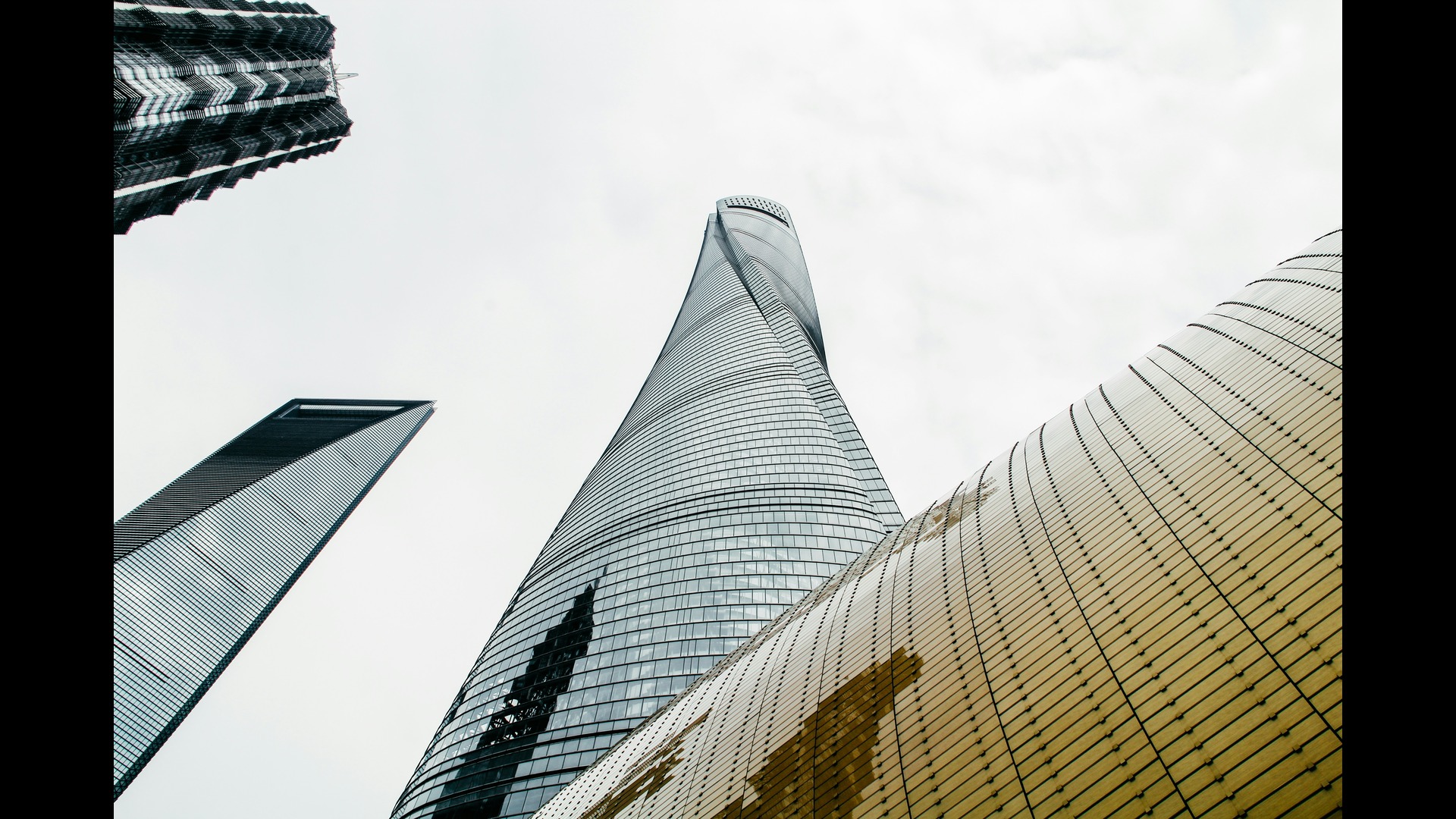
The Shanghai Tower stands as proof of the power of parametric design. To construct China’s tallest building, Gensler utilized advanced computational scripts to optimize the tower’s twisting form. The design team input variables for wind loads and structural stress to the software, which then generated a geometry that twists 120 degrees as it rises.
This specific rotation was not an arbitrary aesthetic decision but a calculated response to the typhoons common in the region. By refining the shape through simulation, the architects reduced the wind load on the structure by 24%. The modeling software also enabled the design to evolve based on performance data, ensuring that the building stayed efficient and stable without overusing materials.
Located in the Zuidas business district, The Edge is frequently cited as one of the smartest and most sustainable office buildings in the world. Its intelligence comes from a sophisticated network of more than 28,000 sensors tracking lighting levels, movement, humidity and temperature. Its developers design the building to run on a central digital backbone that constantly adjusts the environment based on real-time usage.
If a meeting room is unused, the system automatically dims the lights and lowers the climate control to save energy. Employees use a mobile app to find available desks and track their energy use. The comprehensive digital twin allows the facility management team to optimize space and maintenance schedules to ensure the building operates at its peak efficiency while prioritizing human comfort.
The West Bund Convention Center showcases how artificial intelligence bridges the gap between digital design and physical construction. Designed by SOM, it features a crystalline facade that appears to shift with the light. The complex geometry of its roof was developed using multi-objective optimization algorithms. This balanced the need for natural light, lovely river views and structural stiffness.
To realize such an intricate form, the project used AI-controlled robotic fabrication, which assembled components with a degree of precision that manual labor could not easily match. The result is a structure where thousands of panels fit together perfectly, reducing waste and construction time.
Swire Properties, in collaboration with Arup, implemented an AI-driven smart platform called Neuron to manage One Taikoo Place’s complex systems. Neuron analyzes data from building management systems to improve operational efficiency and occupant well-being.
One standout feature is its intelligent elevator, which can anticipate traffic flow. By analyzing usage patterns, the AI positions elevators where they are most likely to be needed, significantly reducing wait times during rush hours. The AI also monitors climate control systems to detect anomalies. Instead of waiting for a component to fail, the data analytics team can proactively address maintenance needs to ensure uninterrupted service.
Designed by Studio Tim Fu, Lake Bled Estate in Slovenia is one of the first to be fully designed with the assistance of generative AI tools. The architects used algorithms to determine the best layout and orientation of the villas in a challenging topographical location.
The design process involved entering parameters such as view corridors toward the lake and solar gain. The AI generated numerous layout options, balancing these conflicting factors to propose a master plan that maximized the land’s value. The result is a structure that blends contemporary forms with the natural landscape. It demonstrates that AI can yield sensitive and context-aware solutions even at a smaller, residential scale.
One of the biggest gains from AI adoption is the reduction of waste and unnecessary spending. By optimizing materials and streamlining construction using robots, projects can stay within the budget more effectively. Research shows an approximately 15% drop in overall project costs compared to the initial budget when AI is part of the process.
Another benefit is enhanced creative and human-machine collaboration. Contrary to the fear that computers will take over designers’ work, AI acts as a powerful collaborative partner. It handles complex calculations and data sorting, so architects can focus on their creative vision and critical decision-making.
The technology provides the options, but it is the human who directs the intent. This distinction is crucial. While the robot can optimize a floor plan for walking distance, it takes human skill and talent to understand the experiential quality of a space.
AI in architecture is moving the industry toward a more efficient and innovative future. The five pioneers featured are proof of what is possible when human creativity is augmented by machine intelligence. As the technology continues to evolve, AI is expected to further empower architects to design aesthetically compelling structures that are more sustainable and responsive to human needs.
Revolutionized is reader-supported. When you buy through links on our site, we may earn an affiliate commision. Learn more here.

This site uses Akismet to reduce spam. Learn how your comment data is processed.