




 By Revolutionized Team

Revolutionized is reader-supported. When you buy through links on our site, we may earn an affiliate commision. Learn more here.
Smart rings promise continuous health monitoring through sensors positioned against the finger, but validation studies reveal substantial differences in accuracy across biometric parameters. These devices track heart rate variability, blood oxygen saturation, skin temperature, physical activity and sleep patterns. The precision of each measurement depends on the sensor technology used and the specific physiological parameter assessed.
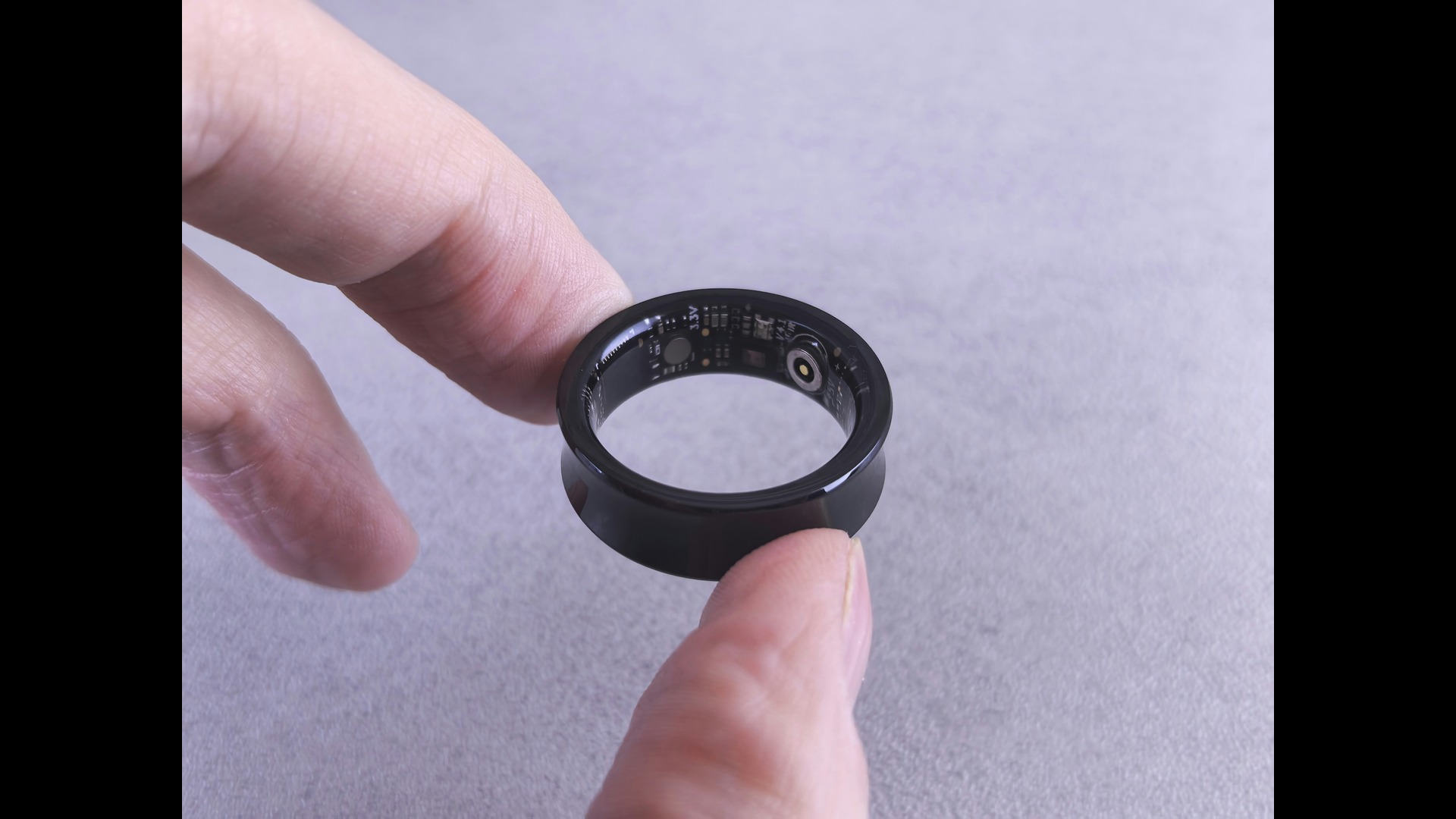
A smart ring functions as a miniaturized health monitoring platform. Such a device evolved from early activity trackers into a sophisticated biometric sensor capable of continuous physiological monitoring. Due to the finger’s rich vascular structure and proximity to arterial blood flow, the ring form factor offers advantages over wrist-worn devices.
Many manufacturers recommend wearing a smart ring on the index or middle finger of the non-dominant hand. Consistent placement matters more than finger choice, as device algorithms calibrate to baseline metrics over time. Proper fit also ensures constant skin contact, which affects measurement accuracy.
The sensors embedded within these devices have been found to measure multiple physiological parameters. Seven biometric data points received the most extensive research scrutiny.
Photoplethysmography (PPG) sensors embedded in smart rings measure heart rate and heart rate variability by detecting changes in blood volume beneath the skin. These optical sensors emit light into tissue and measure the amount reflected back, with variations corresponding to cardiac cycles.
The finger is an ideal measurement site for PPG technology. Research indicates that fingers deliver more accurate heart rate measurements than wrists because of denser concentrations of blood vessels closer to the skin surface. This anatomical advantage reduces signal noise and improves data quality.
For nocturnal heart rate variability measurements, smart rings demonstrate exceptional precision. Studies comparing ring-based HRV data to medical-grade electrocardiogram recordings found very high agreement, with correlation coefficients reaching r² = 0.980 for nightly averages. This accuracy positions smart rings as viable tools for tracking autonomic nervous system function during sleep.
Blood oxygen saturation measurement relies on differential light absorption by oxygenated and deoxygenated hemoglobin. Smart rings typically use red and infrared LEDs paired with photodetectors to calculate SpO2 levels by measuring light absorption at different wavelengths.
Historical limitations in pulse oximetry accuracy across different skin tones have raised concerns about equitable health monitoring. One investigation found that a wearable ring’s SpO2 measurements had a root-mean-square error (RMSE) of 2.1%, exceeding the minimum accuracy requirements established by Food and Drug Administration guidance documents.
The same research demonstrated maintained accuracy for participants with dark skin pigmentation, showing an RMSE of just 1.8%. This performance addresses long-standing disparities in optical sensor technology and suggests that contemporary smart rings can deliver reliable SpO2 data across diverse user populations.
Smart rings use thermistors positioned against the finger’s palmar surface to measure skin temperature. While skin temperature readings typically run 2-3° Fahrenheit lower than core measurements, relative changes over time provide valuable physiological insights.
Trend analysis proves particularly useful for menstrual cycle tracking. Research examining ring-based temperature monitoring found reliable detection of this potential for menstrual cycle monitoring, with a mean increase of 0.30°C from the follicular to luteal phase.
Such measurements correlated strongly with traditional oral basal body readings. The passive, continuous nature of smart ring temperature tracking eliminates the need for conscious daily measurements, thus improving compliance for individuals monitoring fertility windows.
Smart rings have been constantly linked to sleep tracking, combining accelerometer data with heart rate patterns to classify sleep stages throughout the night. Driven by consumer interest in sleep metrics, detection algorithms have undergone considerable refinement.
A 2024 meta-analysis examining sleep tracking efficacy found notable variability in how accurately these devices characterize sleep architecture. The analysis revealed a mean bias of -21.3 minutes for total sleep time estimates compared to polysomnography, which is the clinical gold standard.
The research identified systematic underestimation of REM sleep duration across multiple device models. While smart rings excel at tracking overall sleep-wake patterns, their precision for detailed sleep-stage analysis remains limited. Users seeking trend data rather than clinical-grade assessment will find these devices most valuable.
Most smart rings measure respiration rate without dedicated sensors, extracting breathing patterns from the same PPG signal used for heart rate detection. Each breath creates pressure changes in the chest cavity that alter blood volume in the fingertip and produce detectable fluctuations in the optical signal.
Research on PPG-derived respiration rate measurements shows that this approach works reliably for overnight monitoring. Breathing rate data complements heart rate and movement findings to build a fuller picture of sleep quality.
Accuracy may decline during movement or irregular breathing, but the measurement performs well when users remain still, and both heart rate and breathing maintain steady rhythms.
Beyond conventional health metrics, smart rings have demonstrated utility in novel behavioral monitoring applications. Researchers have developed prototype devices incorporating electrochemical fluid sensors that detect handwashing events. This technology addresses critical needs in healthcare settings.
A 2024 study examining a prototype smart ring designed to monitor hand hygiene in real time reported 97.8% accuracy in detecting handwashing episodes. The electrochemical sensor identifies water and soap by measuring changes in electrical conductivity.
Preliminary testing indicated that this accuracy rate exceeded that of existing electronic monitoring systems used in healthcare facilities by 10.2% to 15.9%. While not yet commercially available, this application illustrates the expanding scope of ring-based sensor technology beyond traditional biometric tracking.
Accelerometers and gyroscopes embedded in smart rings detect physical movement and changes in body position throughout the day. Using movement patterns, the inertial measurement units track step counts, identify activity intensity levels and estimate energy expenditure.
The finger-worn position creates unique challenges for activity tracking compared to wrist or hip placement. Validation studies of ring-based accelerometry examine how arm-swing patterns can translate into accurate step counting. Algorithm refinements have been developed to account for differences in motion profiles captured at the finger versus at traditional tracker locations.
The clinical integration of consumer wearable data has emerged as a new frontier in healthcare delivery. Physicians have begun exploring how continuous biometric information from everyday devices can supplement traditional diagnostic approaches. In one study, physicians used smartphone and fitness tracker measurements to differentiate between patients with and without multiple sclerosis, demonstrating the diagnostic potential of passively collected health metrics.
Sensor miniaturization continues to advance the capabilities of wearable devices. Researchers at Georgia Tech have developed scalp-mounted microsensors that capture high-fidelity signals during everyday activities. Positioned between hair follicles, these sensors recorded quality data while participants stood, sat, walked and ran.
Common questions about smart rings focus on accuracy and practical use.
Most manufacturers recommend the index or middle finger of the non-dominant hand for optimal sensor performance. These fingers typically have more consistent blood flow and less movement during sleep compared to the ring or pinky fingers. Individual anatomy varies, so users may need to experiment to find the most comfortable placement.
Movement introduces signal artifacts that compromise measurement accuracy. PPG-based heart rate readings become less reliable during vigorous exercise when motion disrupts consistent contact between the sensor and the skin. Most smart rings optimize their algorithms for overnight measurements when the body remains relatively stationary.
Continuous wear poses minimal health risks. The devices emit non-ionizing electromagnetic radiation at levels far below regulatory safety thresholds. Some individuals may experience skin irritation from prolonged contact, particularly if moisture becomes trapped beneath the device. Users with metal allergies should verify the ring’s composition before extended wear.
Battery life typically ranges from four to seven days, depending on the model and sensor usage. Devices that enable continuous heart rate monitoring and frequent SpO2 measurements consume more power than those that limit measurements to scheduled intervals. Most rings require one to two hours for a complete charge.
Smart rings now bridge consumer wellness tracking and medical-grade diagnostics with clinically validated accuracy. Advancing sensor miniaturization and sophisticated algorithms will likely expand the physiological parameters that can be measured by unobtrusive wearable devices.
Revolutionized is reader-supported. When you buy through links on our site, we may earn an affiliate commision. Learn more here.

This site uses Akismet to reduce spam. Learn how your comment data is processed.