




 By Revolutionized Team

Revolutionized is reader-supported. When you buy through links on our site, we may earn an affiliate commision. Learn more here.
The Raspberry Pi is arguably the most popular single-board computer in the world, though many alternatives are available for anyone looking to try something different. What are the best Raspberry Pi alternatives in 2026? Radxa Rock 5B+, LattePanda Sigma, Arduino Uno Rev3, Libre Computer Renegade Elite, ZimaBoard 2 and Orange Pi 5 Plus deliver compelling advantages for specific computing needs.
For Advanced RISC Machine-based computing power in 2026, the Radxa Rock 5B+ stands out. Its 8-core Rockchip RK3588 system-on-chip, paired with up to 32 gigabytes (GB) of LPDDR5 Random Access Memory (RAM), tackles demanding applications. The embedded Neural Processing Unit (NPU) supplies 6 tera operations per second (TOPS) of AI computing power, making machine learning tasks far more accessible.
Hardware upgrades include a full-size HDMI connector, replacing awkward micro versions. The dual 4-lane camera interface connectors enable simultaneous connection of up to four cameras. Cellular support is provided via an M.2 B-Key interface and a Subscriber Identity Module card slot, enabling remote deployments without Wi-Fi.
Display output scales across 2K, 4K and 8K resolutions on multiple screens. Connectivity is another area where the board’s hardware supports demanding setups. USB 3.1 Gen 1 ports push data transfers up to 5 gigabits per second for responsive peripheral performance. The hardware design accounts for data-heavy accessories and expansion needs.
When projects require Windows compatibility or x86 processing power, the LattePanda Sigma delivers through its 13th Gen Intel Core i5 processor. This proves essential for running standard Windows applications natively. Dual-channel RAM configurations scale to 32GB for substantial multitasking headroom. Four simultaneous 4K displays transform this compact unit into a legitimate desktop replacement despite its small footprint.
The 44-watt thermal design power rating ensures efficient cooling and maintains stability under sustained loads. This proves particularly valuable during extended work sessions that consistently push the hardware.
Windows 10, Windows 11 and Ubuntu 22.04 run seamlessly, offering genuine operating system flexibility that developers appreciate when testing across multiple environments. Teams migrating Windows-based projects to compact hardware also benefit from this versatility without facing software compatibility headaches.
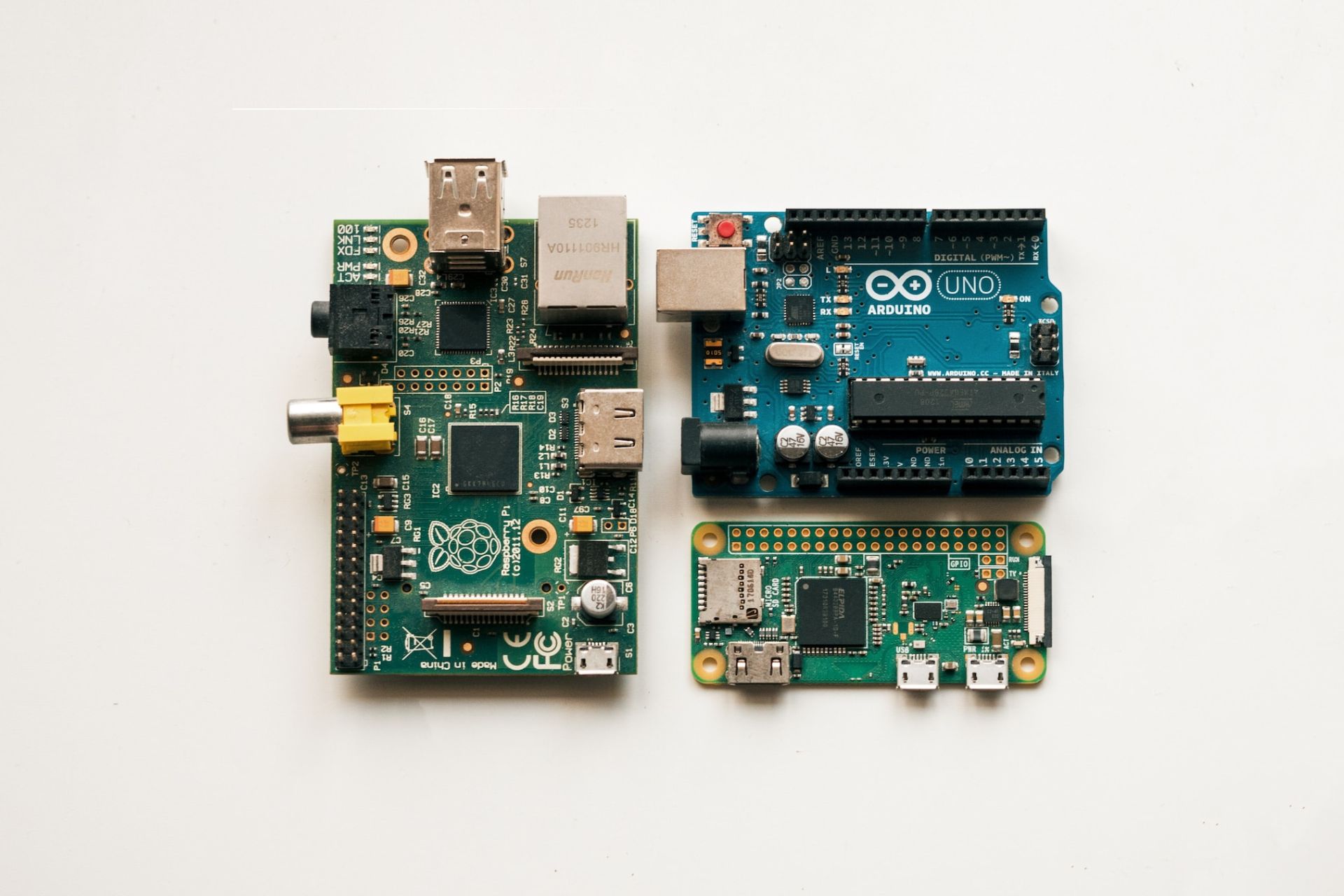
Projects centered on physical hardware interaction rather than complex operating systems find an ideal match in the Arduino Uno Rev3. Built around an ATmega328 microcontroller, this option provides 14 digital input/output (I/O) pins for connecting sensors, motors and similar components, with six supporting pulse width modulation outputs. Additionally, six analog inputs handle variable sensor readings.
Unlike other Raspberry Pi alternatives, this microcontroller architecture integrates memory and peripherals into a single circuit, making hardware tinkering more straightforward. Microcontrollers contain a memory chip along with I/O peripherals, eliminating the need for separate components. A 16 MHz ceramic resonator powers the unit, alongside essential connections, including USB, a power jack and a reset button.
The forgiving nature suits newcomers since replacing the ATmega328P chip costs only a few dollars if mistakes happen. This represents a cost-effective alternative to the Raspberry Pi for electronics prototyping where full computer functionality would be excessive, benefiting custom robots, Internet of Things devices and sensor networks through simplified architecture.
Combining dual Advanced RISC Machine (ARM) Cortex-A72 cores with quad ARM Cortex-A53 processors and 4GB of LPDDR4 RAM, the Libre Computer Renegade Elite packs considerable capability into a remarkably thin 12 millimeter z-height. Its slim profile proves ideal for space-constrained builds where traditional hardware cannot fit.
Strong central processing, graphics and I/O performance converge here through modern connectivity, including USB Type-C with DisplayPort and Power Delivery, HDMI 2.0, Gigabit Ethernet and an M.2 slot with 4-lane PCI Express support. These interfaces handle contemporary peripherals without adapters, which simplifies installations considerably.
Video input and output both scale to 4K resolution while supporting 2K displays. Physical dimensions matter as much as computational ability in embedded systems, where this unit’s balanced specifications and compact form factor excel.
The ZimaBoard 2 specifically targets home server and network-attached storage applications rather than serving as general-purpose development hardware. This focus eliminates common pain points plaguing other single-board computers. For instance, by providing native Serial ATA (SATA) and PCI Express support, it removes the need for adapter boards.
Standard 2.5-inch drives connect directly. Expansion slots accommodate 10-gigabit network cards or Non-Volatile Memory Express adapters for enhanced performance. Direct connectivity simplifies and improves reliability by reducing failure points.
Fast local storage performance and low-latency remote access flow through dual 2.5-gigabit Ethernet ports, enabling Plex media streaming, Pi-hole ad blocking, Proxmox virtualization and Minecraft server hosting to run continuously with minimal noise. DIY enthusiasts seeking advanced capabilities without complexity appreciate how this mini server delivers substantial functionality in an approachable package.
Dedicated hardware acceleration for edge computing and artificial intelligence arrives with the Orange Pi 5 Plus, powered by its 8-core Rockchip RK3588 processor and supporting up to 16GB of RAM. The embedded NPU, delivering 6 TOPS of computing power, brings machine learning inference capabilities directly to the edge while eliminating cloud dependencies.
Both legacy and modern connectivity standards find support through two USB 3.0 ports, two USB 2.0 ports and a Type-C connector offering versatile power and data options. Orange Pi operating system, Android 12, Debian 11 and Ubuntu 22.04 all function as compatible platforms without ecosystem lock-in.
Processing power, neural network acceleration and flexible I/O converge to create particular value for applications processing sensor data locally rather than transmitting everything to remote servers. This approach reduces latency and maintains functionality during network outages, which is compelling for both embedded system enthusiasts and enterprises building machine vision systems.
Matching specifications to project requirements determines the right hardware choice. Memory capacity affects which tasks the system can handle. Processing architecture also matters because x86 runs Windows natively, while ARM offers superior power efficiency. Machine learning projects benefit from dedicated NPUs, and storage applications require native SATA connections rather than USB adapters.
Key factors include:
These questions address common considerations when evaluating Raspberry Pi alternatives.
Memory capacity determines the limits of application complexity, while the availability of neural processing accelerates machine learning tasks dramatically. The choice of architecture between x86 and ARM affects software compatibility, since Windows applications require x86 processors. Power efficiency typically favors ARM designs for embedded deployments.
Debian and Ubuntu run across most ARM hardware with broad compatibility. Windows 10 and Windows 11 require x86 processors, as the LattePanda Sigma provides. The Arduino Uno Rev3 runs firmware directly without any traditional operating system layer.
Learning hardware fundamentals becomes more accessible with simpler options like the Arduino Uno Rev3. These cost-effective alternatives to the Raspberry Pi encourage experimentation, since mistakes rarely cause costly damage. Advanced learners interested in edge computing find strong value in the Orange Pi 5 Plus or Radxa Rock 5B+.
While the Raspberry Pi remains iconic, 2026 brings alternatives offering advantages in areas like superior memory capacity, dedicated AI acceleration and specialized form factors. Match the specifications to your needs and start building.
Revolutionized is reader-supported. When you buy through links on our site, we may earn an affiliate commision. Learn more here.

This site uses Akismet to reduce spam. Learn how your comment data is processed.