




 By Revolutionized Team

Revolutionized is reader-supported. When you buy through links on our site, we may earn an affiliate commision. Learn more here.
Identifying a potentially habitable exoplanet now depends on two separate research tracks. The first is understanding which of the 6,000 confirmed exoplanets are worth pointing an expensive instrument at. The other is a design problem—more specifically, determining what a telescope needs to resolve before a detection actually means something. Neither question has a useful answer in isolation from the other in the search for planets with life potential. Research published in early 2026 advanced both tracks at once.
A team at the Carl Sagan Institute built a catalog of 45 rocky exoplanets sitting within their stars’ habitable zones, where surface conditions could in principle support liquid water.
The team relied on refined stellar energy estimated inferred from the European Space Agency’s now-retired Gaia mission, combined with data from the NASA Exoplanet Archive, since bounding a habitable zone accurately depends less on a planet’s orbital distance alone and more on precisely how much stellar flux it receives.
The calibration point the team used is close to home. Bohl described using Venus and Mars as the solar system’s boundary markers. This is because Venus receives too much stellar energy to remain habitable and Mars doesn’t receive enough. Still, aerospace engineers are considering the idea that, through terraforming, Mars could have an atmosphere that humans could survive in without domes or spacesuits.
An exoplanet catalog aiming to bracket the habitable zone can use that same energy range as a reference point rather than starting from scratch. The team also built orbital eccentricity into the analysis, since a planet swinging between hot and cold extremes on an elliptical orbit is a different habitability case than one sitting on a stable circular path.
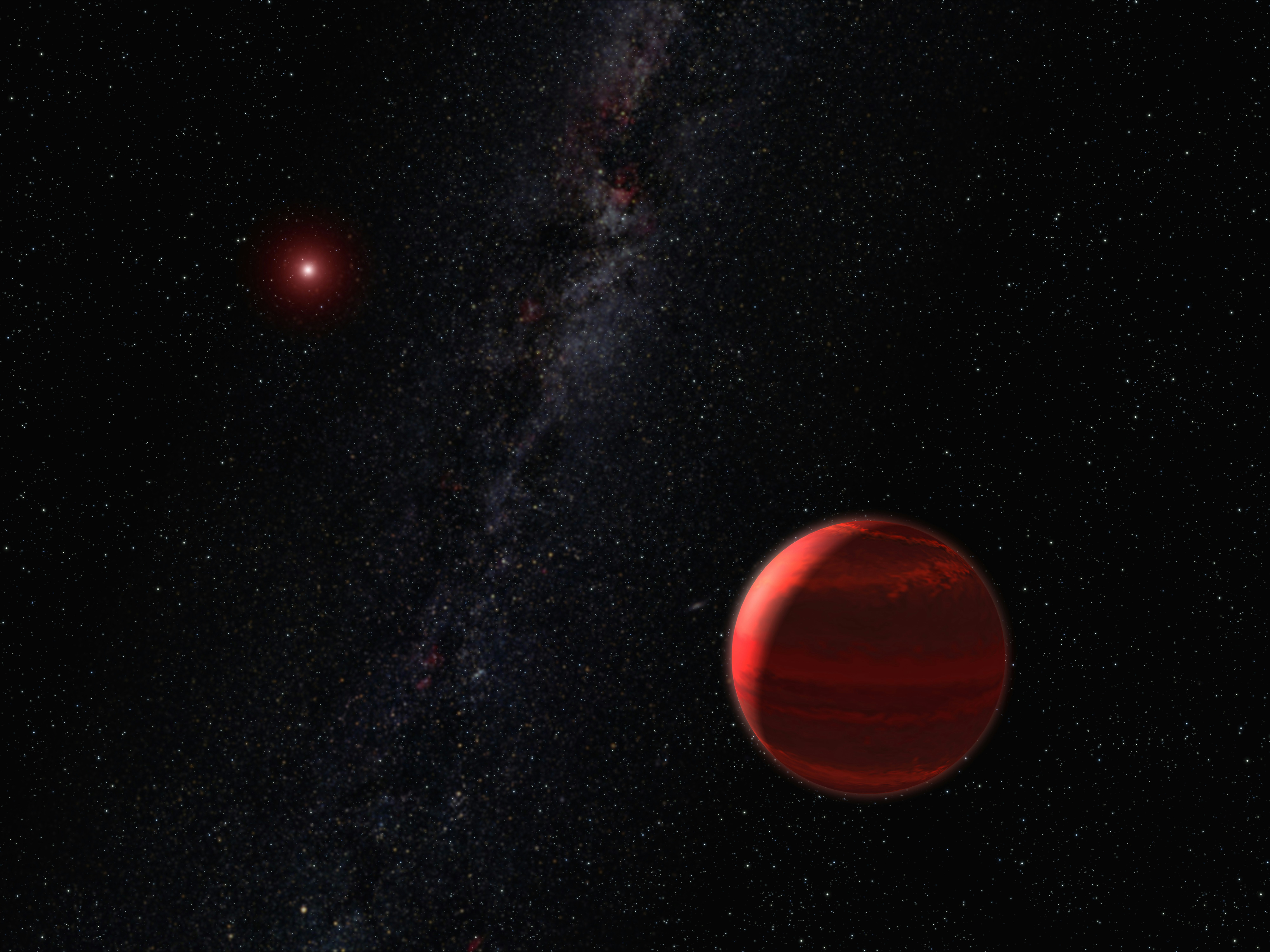
The standout entries on the list show just how varied “potentially habitable” looks in practice. TRAPPIST-1e, part of a compact seven-planet system about 40 light-years out, is still considered a leading candidate for surface water even though it’s likely tidally locked to its star. LHS 1140 b, roughly 48 light-years away, is a dense super-Earth with a reported radius of 1.73 Earth radii and mass of 5.6 Earth masses in the catalog.
Proxima Centauri b is the closest entry, just 4.25 light-years out, though its case is complicated by flare activity from its host red dwarf, which could have stripped away any thin atmosphere long ago.
It’s worth being clear that this catalog serves as a prioritization tool. It flags which targets suit which follow-up method, whether that’s transmission spectroscopy with the James Webb Space Telescope or direct imaging with the next-generation observatories still being built. JWST has already directly imaged exoplanets, showing that these techniques can help characterize distant worlds, though surface-level detail remains beyond current observations.
Having a good target list doesn’t help much if the instrument staring at it can’t actually extract a biosignature from the noise. That’s a problem highlighted in a study tackled for NASA’s Habitable Worlds Observatory, or HWO, the agency’s planned flagship direct imaging mission.
The central design variable is spectral resolving power, essentially how finely an instrument slices incoming light into distinguishable wavelength bins. Setting the resolving power too low could make a living planet look the same as a dead one, but setting it too high and expose times that blow past what any real mission schedule can absorb.
To arrive at an appropriate number, the research team modeled synthetic HWO observations of Earth’s atmosphere across three geological eras, which are the nearly oxygen-free Archean, the partially oxygenated Proterozoic and the modern Phanerozoic atmosphere sitting around 20% oxygen. Each era leaves behind a meaningfully different spectral fingerprint, so an instrument built to hunt for biosignatures generally needs to recognize all three, not just whatever Earth looks like right now.
The team combined analytical detectability calculations across broad resolution ranges with retrieval simulations for selected visible and near-infrared cases. Detecting molecular oxygen, still the most trusted biosignature gas, needs a visible-light resolving power of roughly 140. The authors also note that O3 could offer an indirect low-resolution UV path for inferring O2, with prior work suggesting detectability around RUV ∼7, though UV modeling remains a future-work area.
The near-infrared band turns out to be the harder engineering problem, since carbon dioxide and carbon monoxide features overlap there. Without a near-infrared resolving power of at least 40, HWO could blur CO2 and CO features, weakening CO2 detection and producing misleading CO abundance constraints that complicate biosignature interpretation.
Detector dark current, which is just the residual electron noise a detector generates even with no light hitting it, sets a hard physical floor on all of these numbers. Meaningfully improving on the baseline oxygen detection threshold would mean cutting that dark current by roughly a factor of 10 and increasing the resolving power for oxygen, which would nearly double the exposure time needed to also detect water vapor.
Both of these research efforts land on the same underlying caution, even though they’re tackling different halves of the problem. Oxygen and methane both have known abiotic production pathways, so even an instrument confident enough to detect them can’t fully rule out geochemistry as the source without additional context, such as whether specific anti-biosignature gases are present alongside them. HWO’s engineering targets exist to make that kind of follow-up analysis possible, not to hand back a single clean yes-or-no.
The candidate catalog and resolving power specification form two sides of the same planning process. The catalog guides mission planners in allocating observing time, while the resolving power thresholds define the hardware capabilities required to produce usable data. With HWO still years from launch and its optical specs unresolved, establishing concrete quantitative targets now sets the foundation for the entire mission architecture.
Revolutionized is reader-supported. When you buy through links on our site, we may earn an affiliate commision. Learn more here.
This site uses Akismet to reduce spam. Learn how your comment data is processed.