




 By Lou Farrell

Revolutionized is reader-supported. When you buy through links on our site, we may earn an affiliate commision. Learn more here.
ChatGPT ranks among the most mind-blowing digital tools of the decade. What began as a chatbot demonstration of OpenAI’s large language models has expanded into a versatile platform. It now handles web searches, analyzes and creates images and even crafts that email you’ve been dreading to write. Beyond that, it condenses lengthy reports, writes and reviews code and performs at a level on exams that outpaces most people. At this point, it functions less like a single tool and more like a digital Swiss Army knife.
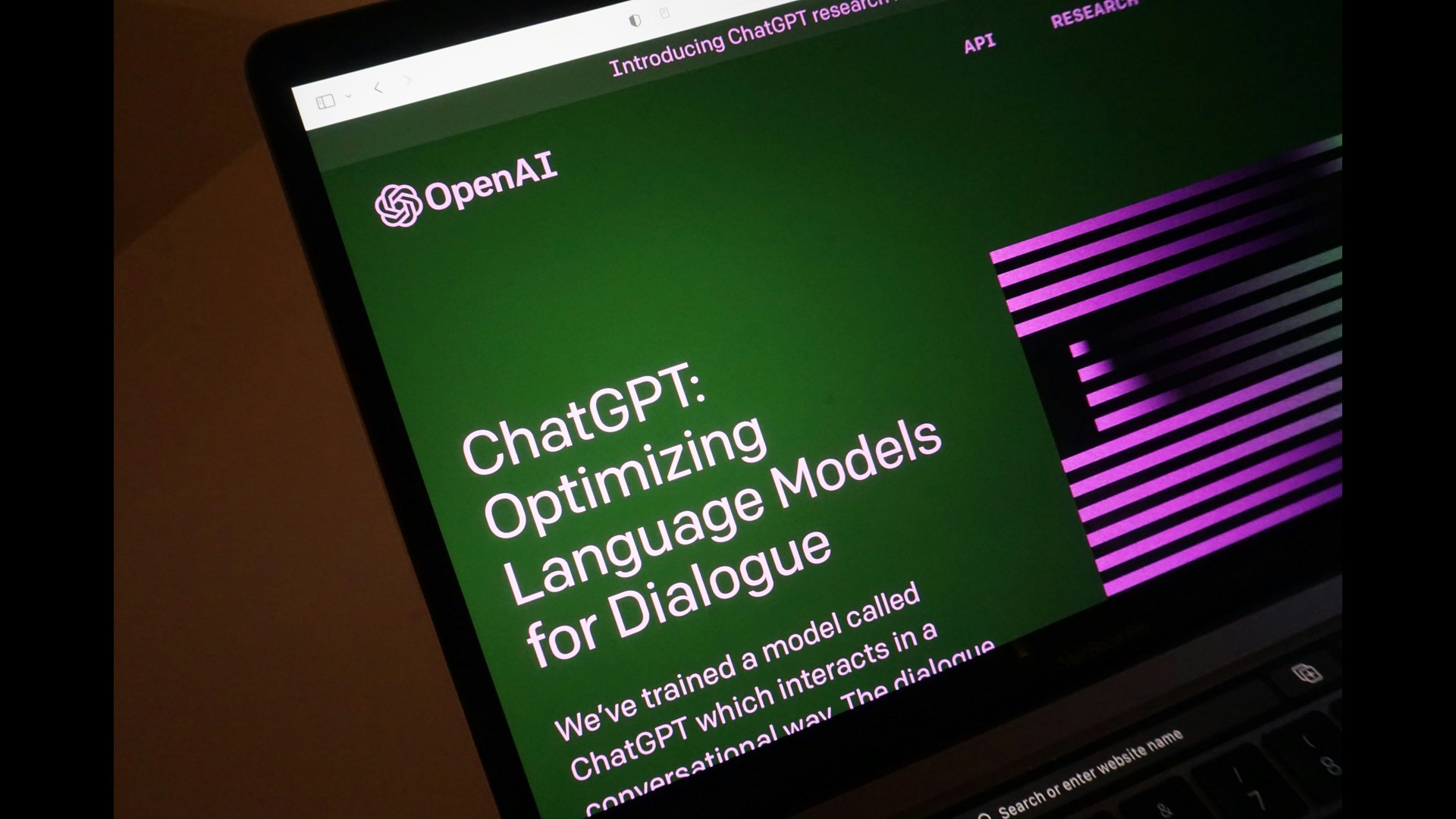
ChatGPT is a conversational artificial intelligence (AI) system developed by OpenAI. What it does is process prompts provided by users and then generate output that ranges from simple answers to complex multistep reasoning — all while maintaining a natural, fluid dialogue. Currently, it runs on GPT-5, the most advanced version in OpenAI’s lineup. Their most recent release integrates features such as real-time web search, multimodal input and even advanced reasoning through specialized models.
As of February 2025, the platform has 367.7 million users sending 2.5 billion prompts daily. Despite popular belief and common uses, it is not a search engine or a fact database. At its core, it’s a large language model (LLM) that generates responses token by token. In simple language, it predicts the next word sequence based on the context of a prompt.
The engine behind it is called a transformer, a type of architecture introduced in 2017 that calculates the weight of each word in a sentence string. This revolutionized AI training by making it faster and more efficient to scale. GPT-5 builds on this foundation, supported by reinforcement learning, safety tuning and integration with external tools, so it’s more dynamic and reliable than earlier versions.
OpenAI distributes ChatGPT through a tiered subscription system. Adopters can access it through a desktop app for macOS, a mobile app for iOS and Android users and a browser version.
This competent AI tool supports both everyday productivity and complex technical workflows. ChatGPT’s consumer usage is largely about completing everyday tasks. One study shows that three-quarters of the dialogue with the chatbot involves guidance, information-seeking or writing — the latter being the most frequent activity. Aside from generating text and editing technical report drafts, process documentations or professional emails, students and employees also use it for class or meeting summarizations.
For data analysis, the AI tool accepts file uploads, runs calculations and produces charts or insights within minutes. A supply chain team, for example, could upload an Excel file of inventory figures and quickly spot trends without opening a separate analytics suite.
Since the system is multimodal, it handles text, audio and images in a single conversation. A user might upload a photo of a machine component and request defect identification or dictate a voice note and have it transcribed into a structured project plan. Combined with its ability to search the web in real-time, ChatGPT provides sourced information, rather than relying solely on training data. This becomes a critical feature when checking for updated compliance standards or market pricing.
In software engineering, ChatGPT supports code generation and debugging. Developers rely on it for writing new functions, exploring APIs and automating repetitive workflows. In one McKinsey study, those who leveraged AI tools were at least 25% more likely to finish complex tasks on time compared to those who didn’t use them. Employees save 52 minutes of their workday, which amounts to approximately five hours per week.
Customization is another strength. Through custom GPTs, teams can build specialized versions trained for their own terminology. This is beneficial for a pharmaceutical regulatory assistants or a legal document checkers. Since it integrates with CRMs and productivity platforms, ChatGPT fits into existing workflows rather than requiring entirely new systems.
While ChatGPT excels in speed and versatility, it also faces apparent limitations. The model sometimes produces inaccurate or outdated information, a phenomenon often referred to as hallucination. Hallucination rates for the older GPT-3.5 version were registered at 39.6%, while those for GPT-4o were at 28.6%. OpenAI reports that GPT-5 shows significant improvement, yet reliability remains a challenge and underscores the need for human oversight. The system also struggles with highly specialized knowledge, complex multistep reasoning and tasks requiring real-world awareness.
Another area of uncertainty is copyright. Courts in the U.S. have ruled that AI-generated content without meaningful human input cannot be copyrighted, leaving businesses and creators in a gray area regarding ownership and intellectual property rights. This legal ambiguity reinforces the importance of editing and human contribution when using ChatGPT outputs for commercial purposes.
For business adoption, data privacy is another concern, though OpenAI specifies that information from Business and Enterprise tiers is excluded from training by default. Still, these systems demand vast amounts of data and often operate with little transparency. Individuals who interact with it have limited control over what is collected, how it’s used or whether it can be corrected or removed. In practice, avoiding digital surveillance is nearly impossible today and AI risks intensifying this problem.
While many employees report time savings, about 19% say they experience no efficiency gains due to steep learning curves or the complexity of their work. These challenges underscore that ChatGPT is not a plug-and-play replacement for expertise, but rather a tool that requires verification when used.
Think of ChatGPT as a fast-moving collaborator or assistant. It streamlines repetitive tasks, sparks fresh ideas and shortens learning curves, but you should avoid sharing information you wouldn’t share with others, even if it feels like just a machine. While its outputs still require review, it is already reshaping workflows across industries. There’s little reason not to try it — you may find it makes your to-do list noticeably lighter.
Revolutionized is reader-supported. When you buy through links on our site, we may earn an affiliate commision. Learn more here.

This site uses Akismet to reduce spam. Learn how your comment data is processed.