




 By Ellie Gabel

Revolutionized is reader-supported. When you buy through links on our site, we may earn an affiliate commision. Learn more here.
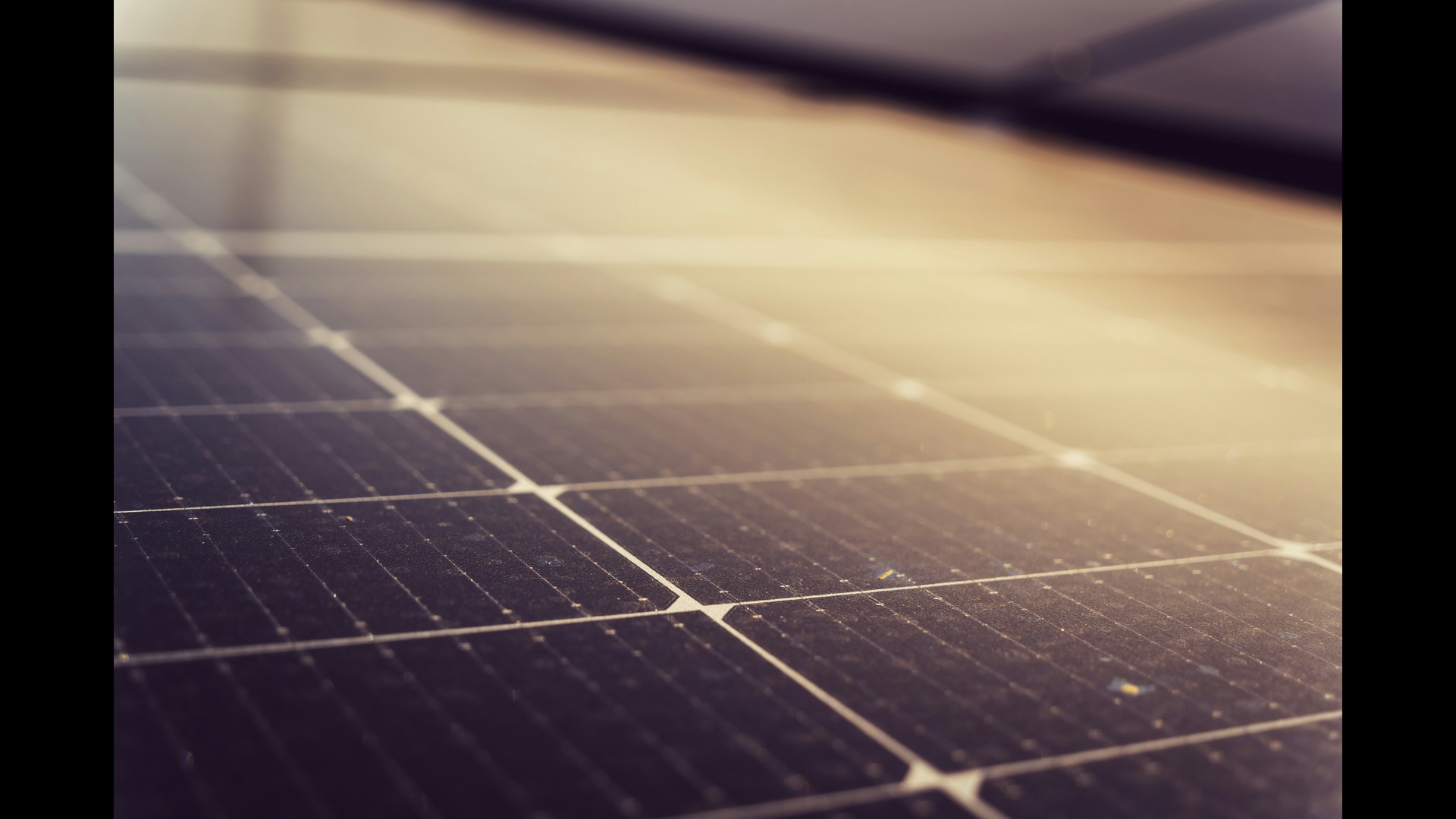
Solar deployment now seeks to extract more power from every square meter already in place. Bifacial solar panels answer that demand by converting irradiance on both the front and rear surfaces of a module, pushing energy yields well beyond what monofacial designs can deliver.
The front surface of a bifacial module absorbs direct and diffuse sunlight the same way a monofacial panel does. The rear surface captures light reflected off the ground and scattered through the atmosphere. Engineers measure the rear-side performance using the bifaciality factor, the ratio of rear-side to front-side power output, which typically falls between 0.70 and 0.90 depending on cell technology.
The cell’s architecture drives that number. Passivated emitter and rear cell (PERC) technology applies a dielectric passivation layer to the back of the cell. That layer reduces electron recombination and bounces unabsorbed photons back into the silicon, turning a previously inactive surface into one that generates current from reflected light.
Heterojunction technology (HJT) goes a step further by passivating both the front and back with identical layers of amorphous silicon. This symmetry enables HJT modules to achieve bifaciality factors above 95%. Such a number indicates that the rear side converts light almost as efficiently as the front.
Albedo is the dimensionless coefficient that measures the fraction of incoming solar radiation a surface reflects. Ranging from 0 for total absorption to 1 for total reflection, it is the single most influential environmental variable driving rear-side energy gain for bifacial solar panels.
Spectral albedo accounts for the variation in reflectivity across different wavelengths of light. Silicon-based cells respond most efficiently to wavelengths between roughly 300 nm and 1200 nm, so the spectral composition of reflected light matters as much as the total reflected quantity. A study from the University of Ottawa demonstrated that rear-side spectral mismatch factors can vary by up to 13%, confirming that broadband albedo measurements alone can overestimate or underestimate actual bifacial gain.
The composition of the ground surface produces a wide range of albedo values. Worn asphalt registers around 0.10 to 0.12, standard concrete falls between 0.20 and 0.30, while dry sand reaches approximately 0.40. White thermoplastic polyolefin roofing membranes and white-painted surfaces push albedo to 0.60 or higher. Fresh snow can achieve albedo values of 0.80 to 0.85.
Bifacial energy gains can reach up to 50% under laboratory conditions and 15% to 37% in building-integrated applications. Installing panels over snow-covered ground can increase generation by 29.2%, while sand can yield a 15% boost.
How a bifacial array is installed affects the additional energy it can generate on the rear side. Tilt angle, ground clearance and row spacing all play a major role in that outcome.
Optimal tilt for a bifacial module differs from the monofacial rule of thumb, where latitude equals tilt. A bifacial system must balance maximizing front-side direct irradiance with exposing enough rear-side area to reflected ground light. Steeper tilts increase the view factor for the rear surface but reduce direct capture on the front.
Scientists tested a 440 W bifacial PERC module on a white-painted rooftop at tilt angles from 0 to 90 degrees. They found that 30 degrees produced the highest daily average power output, or 316.85 W, and a bifacial irradiation ratio between 0.20 and 0.40. Beyond 30 degrees, the total power declined even as the rear-side irradiation ratio increased.
The height of a module above the ground directly affects how much reflected light reaches its rear surface. A panel mounted flush against a rooftop receives almost no rear irradiance because very little ground is visible to the back of the module. Raising the clearance to a meter or more opens up a wider field of reflection, allowing more photons to reach the back side.
Wider row spacing reduces self-shading on the rear surface and increases bifacial gain, but it also means fewer modules per hectare. Developers run ray-tracing simulations to find the right balance and identify the layout that maximizes energy yield per unit of land area.
Many bifacial modules also use a dual-glass structure instead of a traditional opaque polymer backsheet. This glass-glass design improves light transmittance to the rear-side cells while adding mechanical durability, reducing degradation rates over a 30-year-plus lifespan.
The levelized cost of energy (LCOE) is the standard metric for comparing the lifetime financial performance of energy technologies. It factors in total capital expenditure, ongoing operational costs, degradation and total energy produced over a system’s lifetime. For bifacial solar panels, the equation includes a higher up front module cost offset by greater cumulative energy generation over the project’s life.
A study modeled 100 MW bifacial plants across six desert locations and found LCOE values below 4¢/kWh in every scenario, with a minimum of 2.45¢/kWh under favorable irradiance and albedo conditions. Those figures stand out even more against conventional generation.
Electricity from fossil fuels costs between $0.05 and $0.17 per kWh, while solar energy costs between $0.03 and $0.06 per kWh. Those prices continue to fall. Bifacial technology accelerates the downward trajectory by squeezing more kilowatt-hours from the same installation footprint.
With 90% of all solar cells produced in 2024 using bifacial architectures, manufacturing scale continues to drive down module costs. The premium that bifacial modules once carried over monofacial alternatives has essentially disappeared.
Higher energy yields from bifacial systems amplify the effects of intermittency. Panels with greater peak output also produce larger swings between midday generation surpluses and evening deficits. Grid operators must match that variable supply with dispatchable storage.
Lithium-ion battery storage dominates the short-duration segment as it can deliver four to eight hours of discharge. Grid planners are now seeking alternatives to bridge multiday or seasonal gaps in solar production for longer periods. A study from Lawrence Berkeley National Laboratory examined hydrogen’s role as long-duration storage for electricity sector decarbonization. The study found that it reduces the cost of achieving a zero-emission power system by balancing week-to-week mismatches in renewable generation.
Hydrogen has the highest energy density of any fuel. It also allows grids to store significant power in a relatively compact footprint. When produced via electrolysis powered by surplus bifacial solar output, green hydrogen becomes both a storage medium and a decarbonization tool.
Bifacial systems move solar design beyond simple photon collection toward engineering the full installation environment. By optimizing ground albedo, tilt geometry, clearance height and array spacing in concert, developers transform every surrounding variable into a source of additional yield. As these methods mature, the distinction between module performance and site-level design will continue to narrow, making installation engineering just as critical as cell efficiency.
Revolutionized is reader-supported. When you buy through links on our site, we may earn an affiliate commision. Learn more here.

This site uses Akismet to reduce spam. Learn how your comment data is processed.