




 By Lou Farrell


Revolutionized is reader-supported. When you buy through links on our site, we may earn an affiliate commision. Learn more here.
Beneath the rusty surface of the Red Planet, locked within ancient mudstone, NASA’s Mars rover Curiosity has uncovered something extraordinary. The robotic explorer detected a collection of previously unnoticed organic molecules.
This discovery carries profound implications for understanding whether the planet once harbored the chemical ingredients necessary for life. Finding these delicate molecules on a world relentlessly bombarded by cosmic radiation represents a monumental scientific achievement.
Scientists achieved a technological first by conducting wet-chemistry experiments on another planet. Using sophisticated instrumentation, the Sample Analysis at Mars (SAM) aboard Curiosity performed a process involving tetramethylammonium hydroxide (TMAH) to analyze Martian rock samples. The technique broke down complex organic compounds into smaller, identifiable fragments that the rover’s instruments could detect and characterize.
Curiosity targeted a sample called Mary Anning 3, which the rover collected from sedimentary mudstone in Gale Crater. SAM heated the powdered rock with TMAH, a chemical solvent that liberates organic molecules the mineral matrix might otherwise trap. The successful identification of 20 aromatic and cyclic molecules confirmed the viability of this novel analytical technique.
This marked the first time scientists have performed such sophisticated organic analysis beyond Earth. The technique’s success opens new possibilities for future missions to search for complex carbon chemistry on Mars and other worlds.
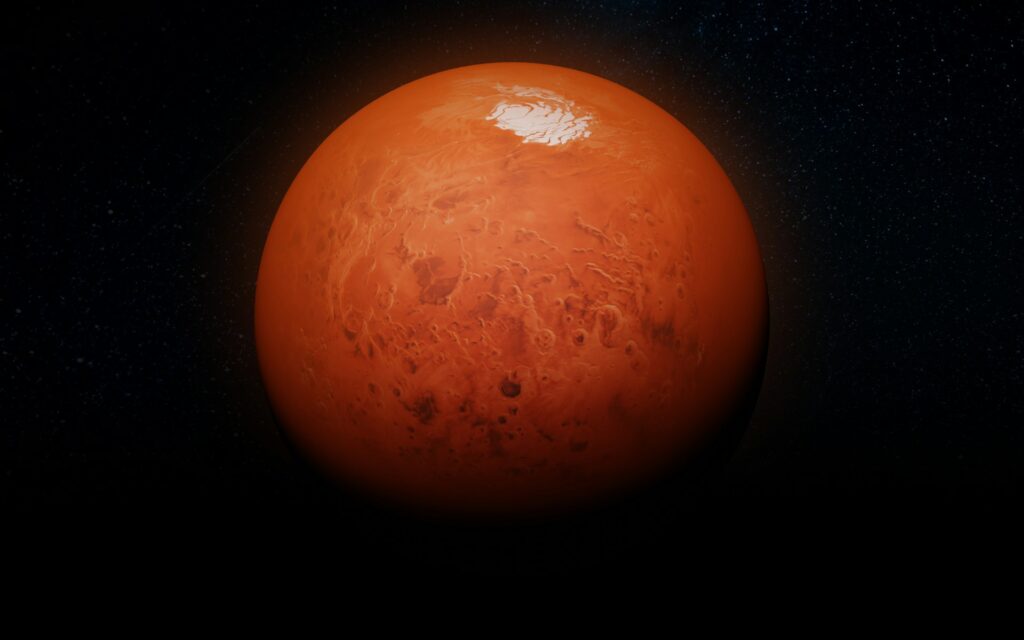
The Curiosity rover discovered a highly diverse collection of organic compounds in the Martian sample. These carbon-based structures include one-ring and two-ring aromatic molecules, nitrogen-bearing compounds and sulfur-containing rings. Among the molecules identified, Curiosity detected seven for the first time on Mars, expanding scientists’ understanding of the planet’s ancient chemistry.
Early Mars possessed the molecular ingredients compatible with life, and this finding reinforces that evidence. Organic molecules serve as the fundamental building blocks for biological processes, though their presence alone does not confirm that life existed. Age-old Martian environments could have supported the chemical reactions necessary for life to emerge, given the variety and complexity of these compounds.
The preservation of such a diverse molecular inventory in rocks billions of years old demonstrates that Mars can protect organic material from destructive radiation and oxidation. This discovery gives scientists confidence that future missions might find even more complex organic signatures in well-preserved samples.
Among the most significant findings are nitrogen-bearing heterocyclic compounds, commonly called N-heterocycles. These are ring-shaped molecules that incorporate nitrogen atoms within their carbon structures. Scientists consider them important because similar compounds serve as precursors to nucleotides, the building blocks of RNA and DNA.
Mars had access to reactive nitrogen species in its ancient past, as suggested by the detection of these nitrogen-rich molecules. Through abiotic nitrogen fixation, these compounds can drive species transformation, a process that converts atmospheric nitrogen into biologically useful forms. On early Mars, this chemical pathway could have enabled the synthesis of increasingly complex organic molecules.
Overall, N-heterocycles represent an essential link in the chain from simple chemistry to the emergence of life. Their presence in Martian rocks indicates that the planet once had the right chemical conditions to support prebiotic chemistry.
The discovery also revealed sulfur-bearing aromatic rings, including benzothiophene, in the Martian sample. Scientists have found a rich inventory of sulfur-bearing rings in meteorites, making these compounds particularly interesting and suggesting they were common in the early solar system.
The presence of these sulfur compounds on Mars links the planet’s chemistry to the broader materials that built the terrestrial worlds. Meteorites delivered organic molecules to early Earth and Mars, potentially seeding both planets with the chemical precursors needed for life. Finding sulfur-rich compounds similar to those in Martian rocks supports this hypothesis.
Sulfur chemistry may have played a vital role in Mars’s habitability. Likewise, its reactions can store and transfer energy in ways that support microbial metabolism, making these compounds especially relevant to the search for ancient life.
The single sample yielded an impressive breadth of organic molecules. Simple one-ring aromatics, more complex two-ring structures and potential fragments of larger macromolecules all appeared in the analysis. Such chemical diversity suggests that ancient Mars hosted active organic chemistry capable of producing and preserving a wide range of carbon compounds.
The NASA Mars rover findings demonstrate that organic material can survive billions of years in the Martian environment when protected from surface radiation. Mars does not have a magnetic field like Earth, leaving its surface exposed to intense ultraviolet and cosmic ray damage that destroys delicate organic molecules. However, subsurface deposits shield organic compounds from this destruction, creating natural archives where biosignatures could remain intact for eons.
These results validate the strategy of searching for life’s chemical traces in carefully selected geological contexts. Future missions will build on this foundation by targeting materials buried deep beneath the surface, where preservation conditions offer the best chance of finding evidence of ancient Martian life.
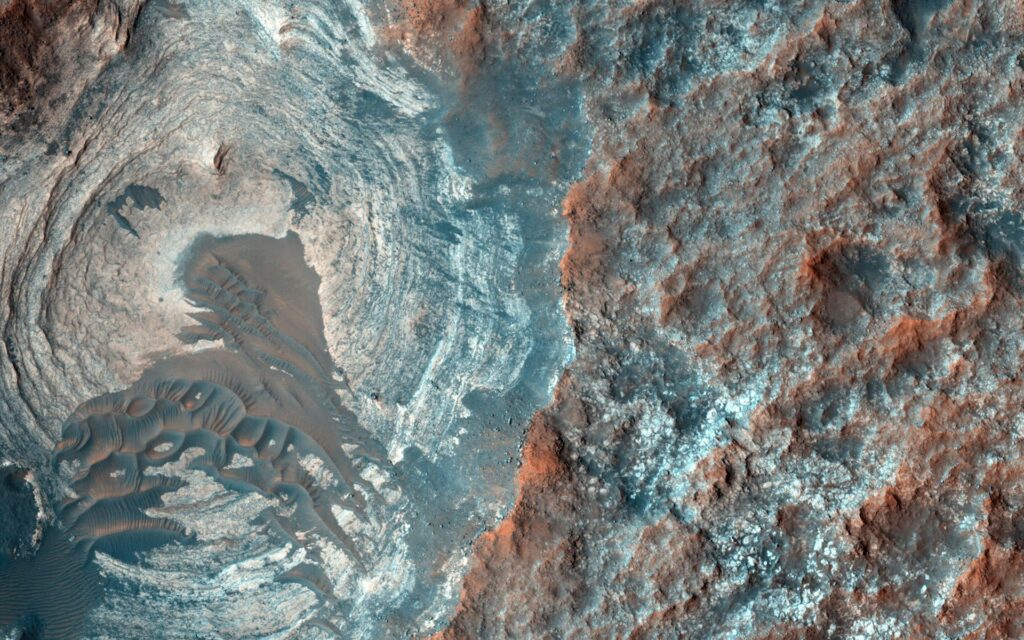
Curiosity’s discoveries have shaped the design of upcoming Mars exploration missions. The European Space Agency’s ExoMars rover, named Rosalind Franklin, carries instruments designed to detect biosignatures in subsurface materials. The rover’s ability to drill up to 2 meters deep represents a major technological advancement, allowing scientists to access rocks never before sampled on Mars.
ExoMars will analyze these deep samples using onboard instruments capable of detecting complex organic molecules and identifying potential biological signatures. The mission’s focus on subsurface exploration addresses one of the key limitations of previous surface-based studies. Launch is planned for the late 2020s, with landing expected shortly after arrival.
The Mars Sample Return mission represents another goal of planetary exploration. NASA is developing this multi-mission campaign to collect carefully selected Martian rocks and bring them to Earth for analysis in advanced laboratories. Scientists will continue gathering samples that may one day reveal whether life ever took hold beyond Earth.
These questions address common inquiries about Curiosity’s discovery of organic molecules and what it means for the search for life on Mars.
Organic molecules are carbon-based compounds that can form through biological or nonbiological processes. While all life requires organic molecules, their presence does not prove life existed. Scientists need additional evidence, such as specific molecular patterns, isotopic signatures or cellular structures, to confirm biological activity.
Mars lacks a protective magnetic field and thick atmosphere, exposing its surface to intense ultraviolet radiation and cosmic rays. These energetic particles break down organic molecules over time. Additionally, oxidizing compounds in Martian soil chemically degrade carbon-based materials, making preservation challenging except in protected subsurface environments.
NASA is currently developing the Mars Sample Return mission, with the earliest samples likely arriving in the 2030s. This ambitious program requires multiple spacecraft launches, sample collection on Mars, a launch from the Martian surface and a rendezvous in space before returning the precious cargo to terrestrial laboratories.
NASA’s Mars rover Curiosity has confirmed that ancient Mars had the molecular ingredients necessary for life. While this finding does not prove life existed, it establishes that Mars had the fundamental building blocks that could survive for billions of years. The question of whether these molecules ever assembled into living systems remains unanswered, awaiting future robotic explorers.
Revolutionized is reader-supported. When you buy through links on our site, we may earn an affiliate commision. Learn more here.
This site uses Akismet to reduce spam. Learn how your comment data is processed.