



 By Ellie Gabel


Revolutionized is reader-supported. When you buy through links on our site, we may earn an affiliate commision. Learn more here.
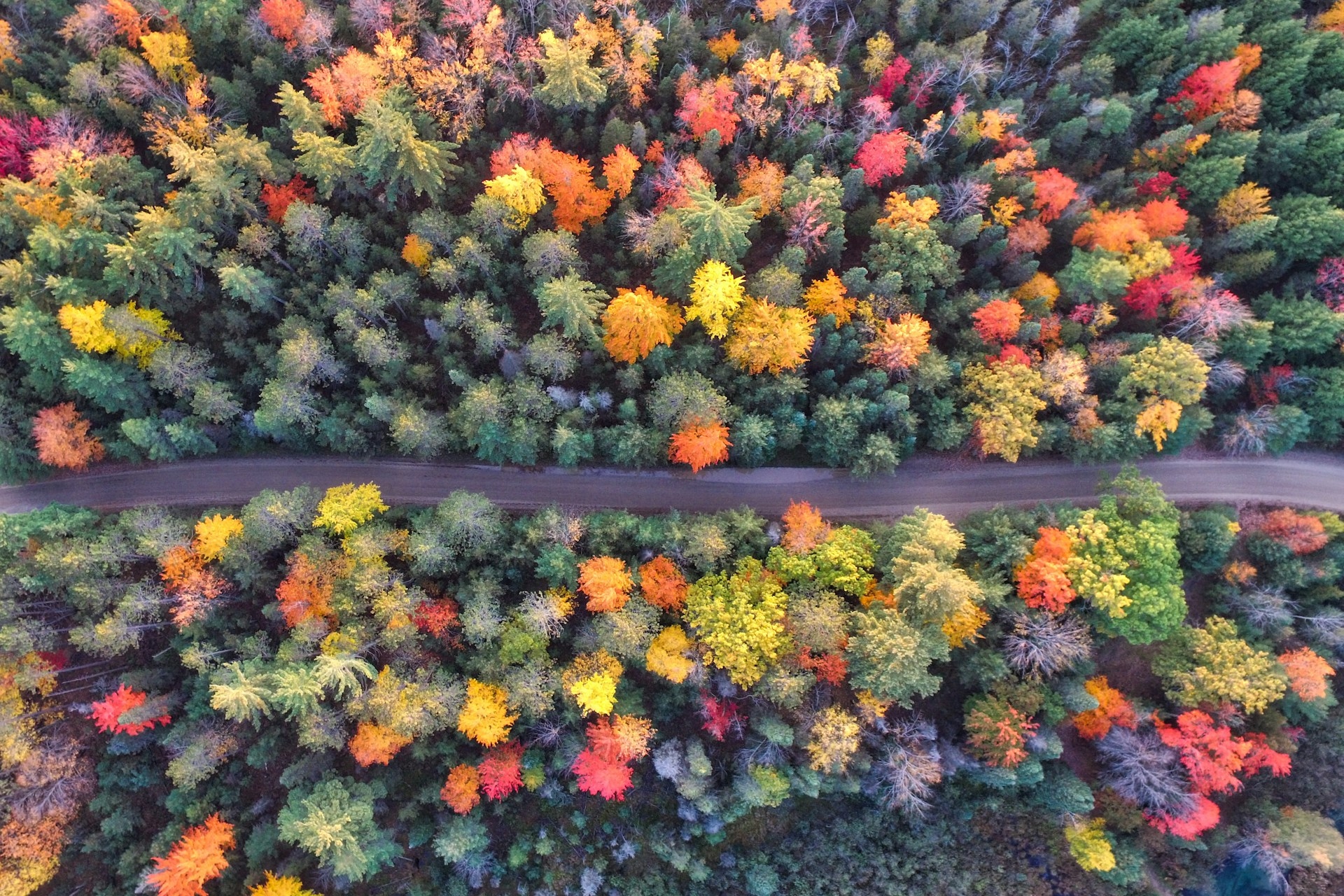
Each autumn, deciduous forests undergo a dramatic chromatic shift. What appears as a simple seasonal color change is actually a complex biochemical cascade driven by environmental cues. Understanding this phenomenon requires examining the molecular mechanisms governing senescence, the abiotic triggers initiating dormancy and the environmental stressors increasingly disrupting this timeline.

The yellows and oranges visible in autumn leaves are not newly synthesized pigments. Secondary photosynthetic compounds responsible for making carrots orange and bananas yellow contain carotenoids and flavonoids that remain present in leaf tissue throughout the growing season. During active photosynthesis, chlorophyll masks these molecules entirely.
As breakdown begins, their presence becomes evident through a predictable molecular sequence in which chlorophyll deteriorates faster than the more stable accessory pigments. The process reveals colors that existed beneath the dominant green all along.
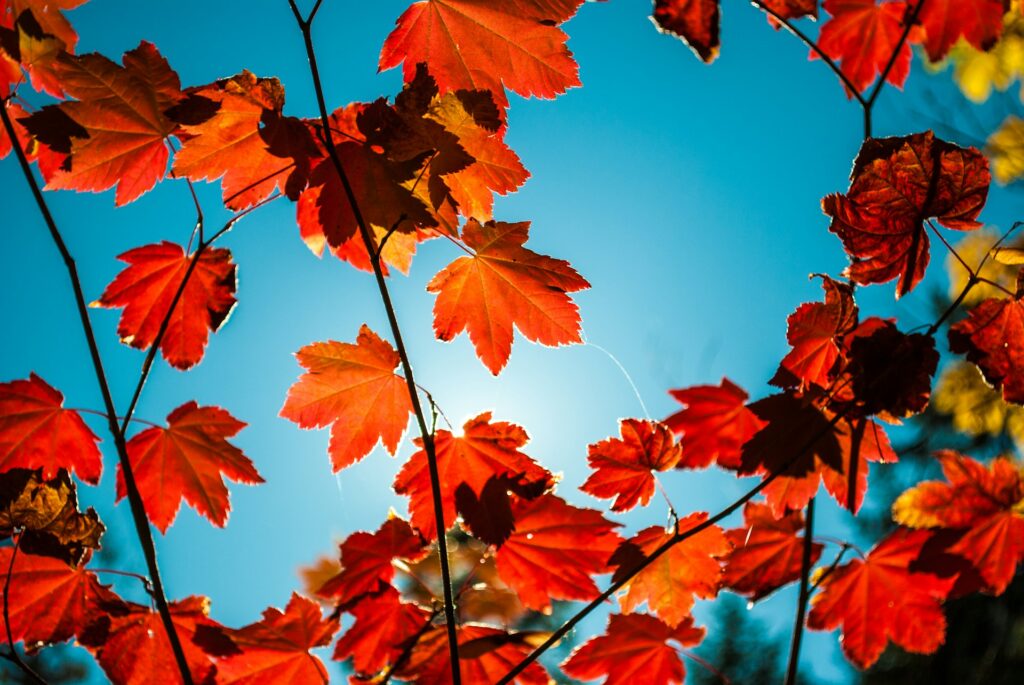
While yellows and oranges come from year-round molecules, reds and purples follow an entirely different biochemical pathway. Trees actively produce anthocyanins in the fall as they prepare for dormancy, rather than revealing what already exists. These newly synthesized pigments serve a protective function by shielding leaf cells from photodamage as nutrient recovery processes unfold.
Interestingly, coloration intensity can reflect circumstances from previous years rather than just the current season. Earlier rainfall during the growing season allows for increased photosynthate accumulation and greater energy reserves. Such stored energy can enhance foliage production in subsequent autumns, demonstrating how trees carry forward the metabolic legacy of past environmental patterns.
Trees reclaim nitrogen and other valuable compounds before shedding foliage, essentially salvaging resources that would otherwise be lost. This nutrient recovery from dying leaves significantly affects plant nutrient status and growth, making autumn shutdown a critical process for carbon-cycle predictions.
Nitrogen resorption rates run higher in deciduous woody plant functional types compared to evergreen species. Leaf structural characteristics and environmental factors drive this dynamic scheme, which decreases with rising air temperature and directly links metabolic efficiency to thermal conditions.
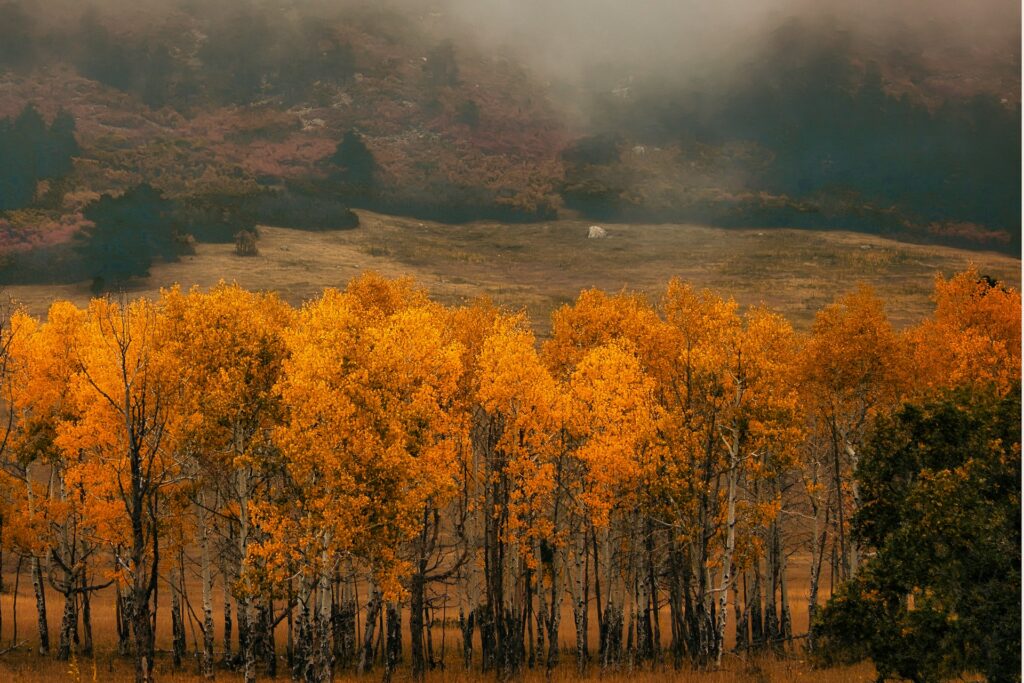
Across North America, foliage exhibitions follow a predictable geographic pattern. Northern states and higher elevations typically reach maximum color intensity first, with the peak season starting in late September and continuing through early November across temperate regions. As cooler temperatures advance, the wave of transformation moves southward. Mountainous regions often display the most dramatic transitions because elevation gradients create microclimates.
Foliage trackers, such as one offered by the Farmers’ Almanac, let observers monitor when and where peak conditions occur in real time. These digital tools help predict optimal viewing windows based on latitude, elevation and current weather patterns, with accuracy improving as historical data accumulates and modeling techniques become more sophisticated.
When warm autumns arrive, they can delay seasonal decline by weeks, while early cold snaps may trigger premature leaf drop before full coloration develops. Temperature and moisture also affect infection severity and disease distribution in forest plants, with host characteristics further influencing these outcomes.
More extreme scenarios arise when prolonged drought overwhelms the physiological and structural capacity of trees. Severe stress directly kills large expanses before dormancy preparation can proceed normally, resulting in brown, desiccated foliage rather than the vibrant spectacle associated with healthy autumn transitions.
Meanwhile, forest fungi cause wood decay at patterns and rates expected to change in response to shifting climate circumstances. Such decomposition dynamics influence forest carbon cycles and nutrient availability for future growing seasons.
Natural conditions that induce autumn color shows are shifting with a warming climate, affecting both ecological function and economic value in regions where fall foliage drives significant visitor activity. New England alone generates an estimated $8 billion in tourism revenue annually during peak season.
The threat stems from a fundamental requirement. Colorful leaves need cool nights to develop their full chromatic potential, yet data show that nights are about 2.7°F (1.5°C) warmer on average than they were from 1970 to 2023. This effect intensifies at higher latitudes and elevations where warming accelerates most dramatically.
Broader seasonal trends amplify these challenges. Winter temperatures have risen by 1.6°F (0.89°C) while spring has warmed by 2°F (1.11°C), altering the environmental signals trees rely on to initiate dormancy even as photoperiod remains constant. Trees evolved to respond to both thermal and daylight cues simultaneously, so the mismatch between stable day length and shifting temperatures fundamentally disrupts the shutdown process.
Environmental stress significantly affects survival by forcing trees to divert resources away from the controlled shutdown sequence that produces vivid coloration. Instead of the vibrant displays associated with healthy transitions, stress manifests as muted hues or irregular color development across canopy layers.
Several common questions arise when discussing the mechanisms driving seasonal color change. The answers below reinforce key biochemical and environmental principles outlined in earlier sections.
While cooling temperatures typically trigger dormancy preparation by signaling reduced daylight availability and approaching winter conditions, warmer fall nights extend the period during which photosynthesis remains viable. This delay can push optimal viewing into periods when early storms or freezes damage foliage before anthocyanin synthesis peaks.
Beyond producing the red and purple hues characteristic of many autumn displays, anthocyanins enable trees to maximize nutrient-retrieval efficiency during leaf shutdown. By filtering excessive light and eliminating reactive oxygen species, these compounds reduce photoinhibition at a time when other protective mechanisms have begun to deteriorate.
Photoperiod alone is insufficient to trigger the biochemical cascade that initiates dormancy when temperature signals contradict seasonal expectations. Extended warm periods prevent the consistent cool nights required for anthocyanin synthesis, while altered precipitation patterns disrupt moisture balance. Without both thermal and moisture cues aligning with shortening days, shutdown either activates late or proceeds incompletely.
The delicate balance sustaining autumn color depends on precise interactions between biochemical pathways and environmental signals. As shifting climate circumstances continue to test the narrow tolerances within which metabolic processes governing pigment expression operate, protecting the integrity of fall foliage displays requires understanding these factors and addressing the stressors that increasingly disrupt them.
Revolutionized is reader-supported. When you buy through links on our site, we may earn an affiliate commision. Learn more here.

This site uses Akismet to reduce spam. Learn how your comment data is processed.