




 By Lou Farrell


Revolutionized is reader-supported. When you buy through links on our site, we may earn an affiliate commision. Learn more here.
This year marks a pivotal moment in humanity’s environmental journey. Rather than simply cataloging ecological decline, scientists and technologists are engineering tangible solutions to planetary challenges. Through the convergence of artificial intelligence, ecological restoration and atmospheric engineering, these environmental projections for 2026 reveal a fundamental shift from reactive damage control to strategic, solution-focused action.
The most transformative development in environmental science involves moving from reaction to prediction. Advancements in data processing and artificial intelligence (AI) now allow scientists to model planetary futures with greater accuracy, enabling proactive solutions before crises fully materialize.
At the heart of this predictive shift are AI, machine learning (ML) and deep learning (DL) technologies. These systems process vast and diverse datasets to detect patterns and generate real-time predictions that were impossible just years ago. By analyzing atmospheric conditions, ocean temperatures and carbon concentrations across millions of data points, ML algorithms continuously refine their accuracy.
DL takes this further by extracting high-level features from complex datasets, identifying subtle correlations that human analysts might miss. The result is a revolution in climate modeling.
Traditional models required weeks of supercomputer processing. However, AI-driven systems deliver real-time forecasts with greater precision. Researchers can rapidly test intervention scenarios to determine which strategies yield the greatest environmental benefits before deploying resources.
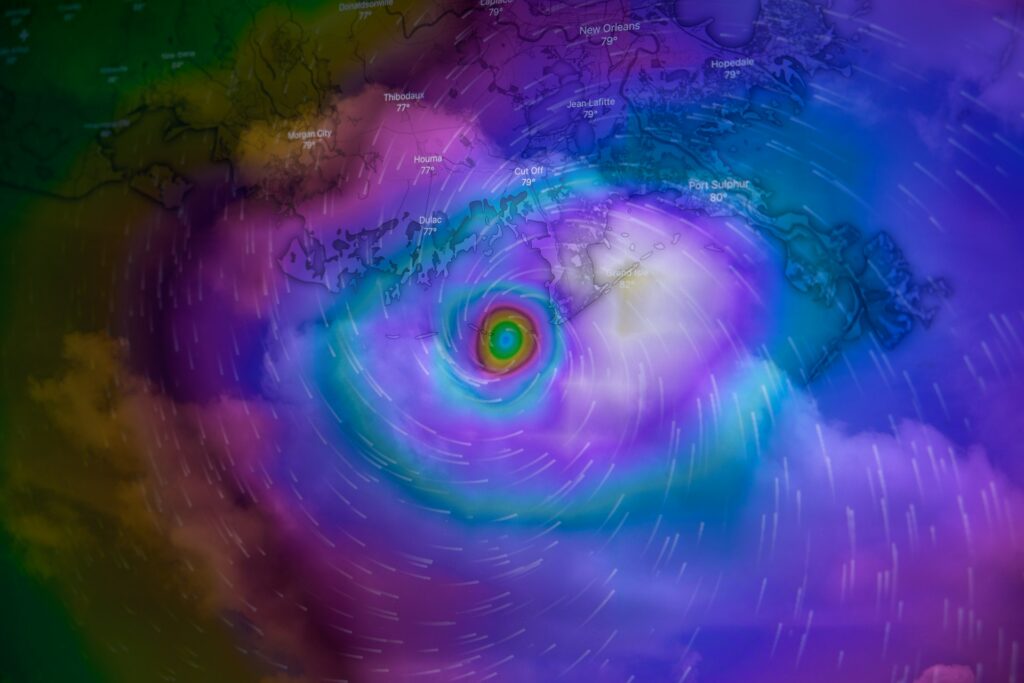
Global climate models become truly powerful when they translate into localized, actionable forecasts. Aurora, a foundation model for the Earth system, conveys this breakthrough by transforming worldwide data into highly accurate predictions for specific regions.
In critical areas, such as air quality and ocean wave patterns, the system can surpass conventional operational forecasts while handling pertinent orders faster and more cost-effectively. Beyond simple prediction, Aurora’s capabilities extend to something even more powerful.
By creating accurate simulations of critical infrastructure, the technology enables the development of digital twins for Earth systems. Scientists can test restoration strategies, model pollution dispersion and predict the impacts of extreme weather on specific communities using these virtual replicas. Abstract global data further transforms precise, local intelligence that guides everything from coastal protection to agricultural planning.
While digital modeling provides the roadmap, tangible on-the-ground interventions are restoring natural habitats that faced catastrophic decline in recent years. The following environmental projections highlight restoration as a cornerstone of planetary recovery.
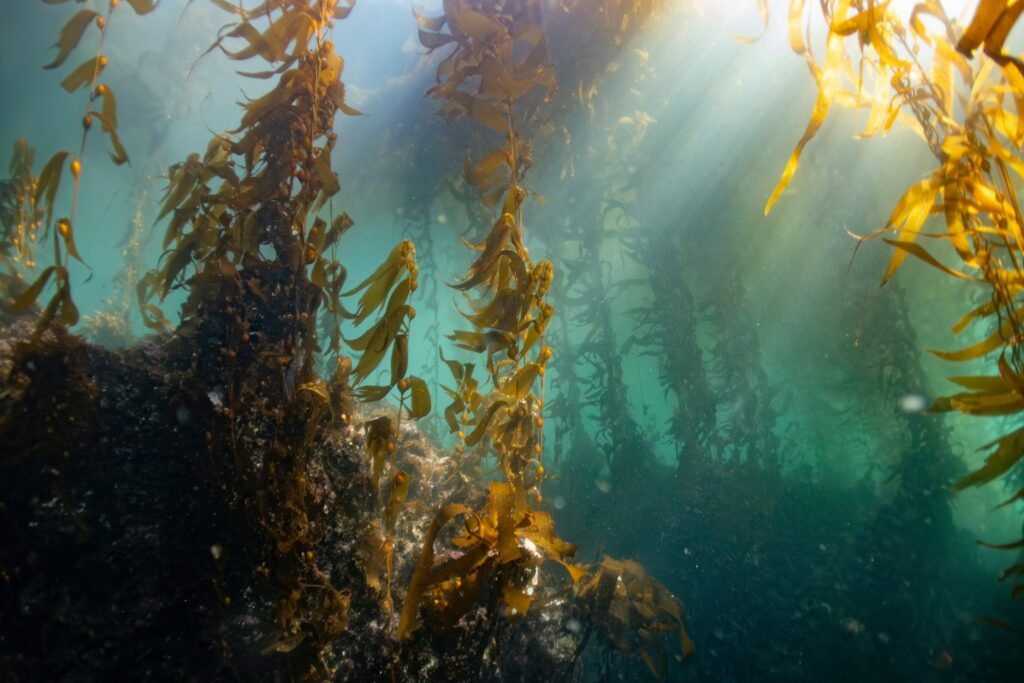
Devastating losses have plagued kelp forests along the Northern California coast over the past decade. Along 350 kilometers of coastline, some regions have lost over 95% of kelp. Warming waters, sea urchin population explosions and diminished sea star predators that once kept urchin numbers in check have driven the collapse.
State-level policy and funding are now back in restoration efforts, marking a coordinated response to the crisis. As a leader in these initiatives, the Monterey Bay National Marine Sanctuary (MBNMS) actively assists research projects on kelp restoration, including identifying key considerations before implementation and conducting cost-feasibility analyses.
Scientists, academic institutions and fishermen who understand local marine conditions collaborate on these projects. Removing excessive sea urchins through targeted culling programs forms one prong of the strategy, while outplanting healthy kelp specimens in cleared areas forms another. Through ongoing support for underwater fieldwork, MBNMS ensures that restoration efforts remain scientifically sound and adaptable to changing conditions.
Critical marine habitats rely on kelp forests, which support diverse fish populations and provide nursery grounds for commercially important species. The carbon dioxide these ecosystems sequester makes their restoration valuable for both biodiversity and climate mitigation.
Beyond restoring damaged ecosystems, scientists are amplifying the natural carbon-sequestering capabilities of marine organisms. Already absorbing 40% of the world’s carbon dioxide, ocean phytoplankton rank among the planet’s most important biological carbon sinks. Methods to boost this natural process through controlled nutrient enrichment are now under exploration.
Phytoplankton production increases when nitrogen and phosphorus concentrations rise at the ocean surface. During blooms, these microscopic organisms draw down atmospheric carbon through photosynthesis. Dead phytoplankton sink to the ocean floor, transporting captured carbon to deep-sea sediments where it remains sequestered for centuries.
Leveraging existing biological processes rather than introducing new technologies makes this approach scalable for atmospheric carbon reduction.
Biological solutions address ongoing emissions, but removing legacy carbon dioxide already in the atmosphere requires large-scale engineering interventions. Direct Air Capture (DAC) is a critical tool for extracting carbon dioxide directly from ambient air, and recent breakthroughs are making this approach feasible.
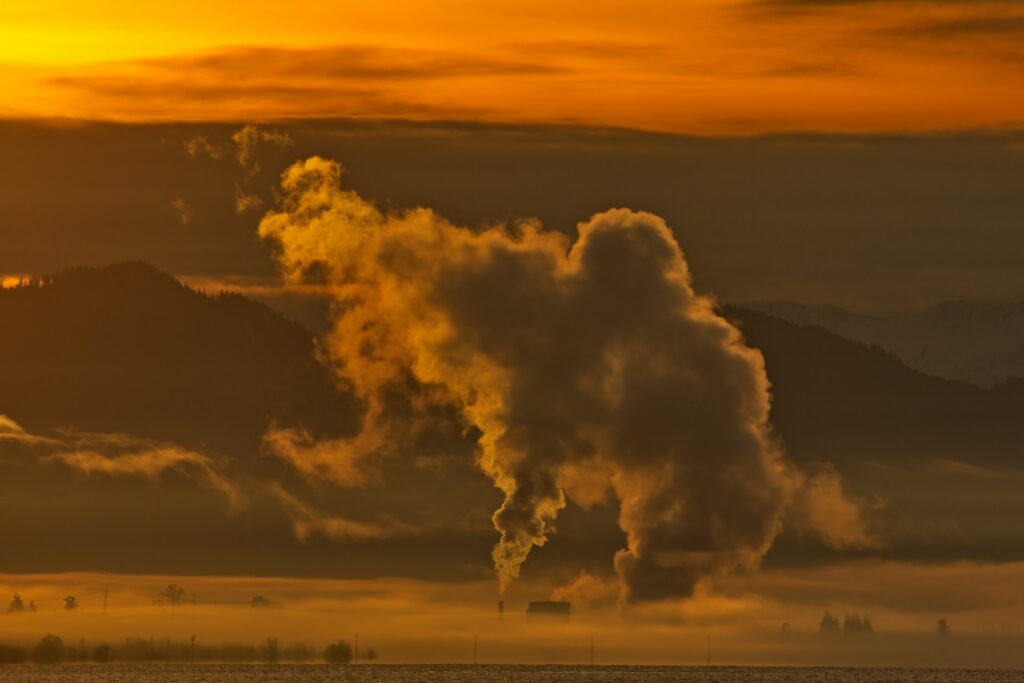
Cost and energy inefficiency have historically hindered DAC deployment at scale, but improvements in system performance through new electro-thermal approaches now overcome these barriers. With energy efficiency reaching over 90%, recent innovations represent a significant leap from the 40% efficiency of older thermal methods.
This efficiency gain changes the economic viability of DAC technology. Carbon removal costs now track toward less than $100 per ton, making large-scale deployment commercially practical.
Through pilot facilities capturing thousands of tons of carbon dioxide annually, companies like Sustaera demonstrate these advances while consuming far less energy than previous generations of equipment.
Innovation in DAC extends beyond efficiency improvements to address real-world operational challenges. A Northwestern University research team developed a system that uses manganese oxide to sequester CO2 even in the presence of oxygen and humidity.
Other carbon capture materials typically degrade under these atmospheric conditions, limiting their effectiveness outside controlled laboratory environments. By addressing this critical limitation, the manganese oxide approach enables DAC systems to operate reliably across diverse climates and weather conditions.
Innovation is occurring across both commercial ventures and academic laboratories, with each solving different technical challenges that previously limited widespread deployment. Together, these advances are transforming DAC into a practical tool for reducing atmospheric carbon.
The following questions address common inquiries about environmental progress and the technologies driving positive change in 2026. These environmental projections reflect both current achievements and emerging capabilities in climate science.
A transition from documenting environmental problems to deploying scalable solutions defines 2026. Actionable predictions rather than general forecasts now come from AI-driven climate models and are made possible through government funding and multi-stakeholder coordination and support.
Likewise, carbon capture technology is now efficient enough for commercial deployment. Momentum absent in previous years emerges from these simultaneous developments.
Significantly more data sources feed into AI climate models than into traditional systems, including real-time satellite imagery, ocean sensor networks and atmospheric monitoring stations. Based on new information, ML algorithms continuously refine their predictions while DL identifies complex patterns across datasets.
For example, AI like Aurora now forecasts air quality and waves faster and more accurately than traditional models. By application, the accuracy improvement varies but represents a substantial enhancement over models developed even five years ago.
Technologies that were once theoretical have finally matured, with breakthroughs in AI, material science, and biotechnology making projects more scalable and cost-effective than ever before. This is combined with a strategic shift in mindset — moving beyond passive conservation toward active environmental engineering.
With a clearer, data-driven picture of the challenges ahead, the focus has turned to proactive intervention, driving investment and willpower toward solutions that can rebuild and rebalance the planet’s systems.
Predictive AI, hands-on ecosystem restoration and atmospheric carbon engineering demonstrate that 2026 is genuinely a year of tangible, optimistic action rather than distant promises. These environmental projections reveal how science and technology are creating measurable pathways toward planetary recovery.
Revolutionized is reader-supported. When you buy through links on our site, we may earn an affiliate commision. Learn more here.

This site uses Akismet to reduce spam. Learn how your comment data is processed.