




 By Ellie Gabel

Revolutionized is reader-supported. When you buy through links on our site, we may earn an affiliate commision. Learn more here.
Vertical agriculture is no longer a futuristic concept — it is a rapidly developing industry safeguarding the global food supply and helping fight hunger. Advancements in vertical farming technology are truly making it a viable solution to global nutritional shortages. From artificial intelligence (AI)-powered automation to sustainable infrastructure and genetically diverse cultivars, these solutions are creating a new frontier for more resilient and efficient food supply chains.
Vertical agriculture has proven itself beneficial time and again. As a growing population and climate change place undue stress on food security, this approach to crop production will be essential to feeding the planet. The latest vertical farming technology is helping to boost yields and create a more resilient system. Here’s how the following developments are powering harvests.
AI and machine learning technologies have revolutionized vertical agriculture. A network of sensors backed by the Internet of Things (IoT) helps monitor crops in real time, including temperature, humidity, pH levels, nutrient concentrations and soil moisture. The data allows growers to optimize conditions for maximum growth, while also predicting adjustments based on plant needs.
The integration of robotics in planting, pruning, harvesting and packaging is also reducing labor costs and enhancing efficiency. For high-value specialty crops, labor can account for almost 40% of total expenses, compared to field crops, especially since they often require more maintenance. Automation is a promising solution, enabling around-the-clock, scalable operations in fresh produce production and distribution.
The predictability is especially transforming modern logistics, allowing for more accurate inventory management and on-demand distribution with reduced waste.
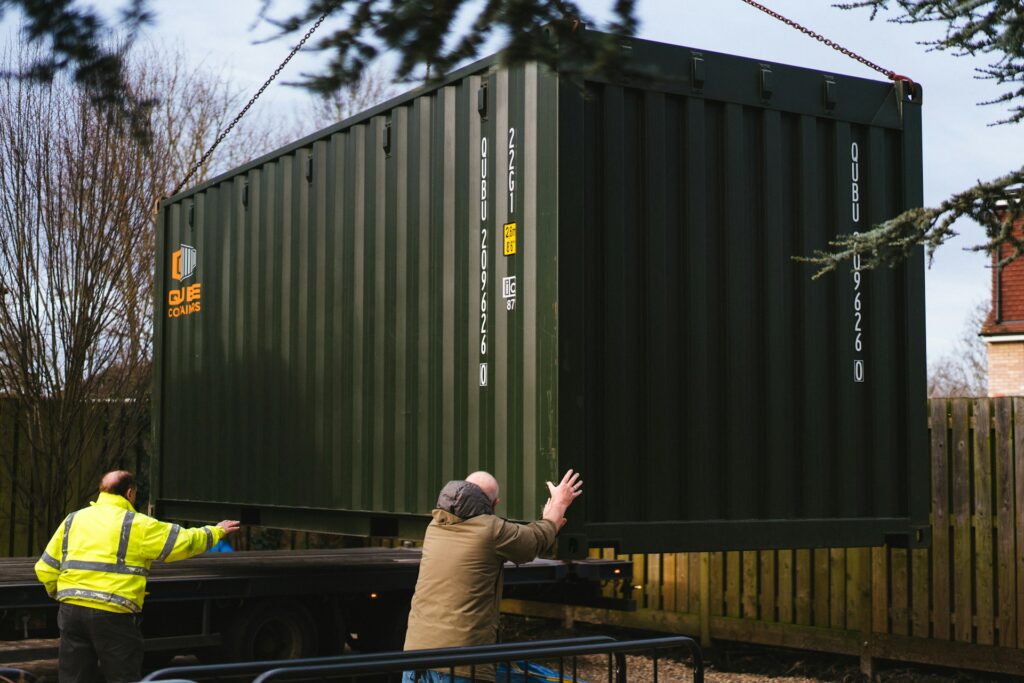
Repurposing existing structures has emerged as a key trend in driving vertical crop growth. For example, converting underutilized or abandoned warehouses and standard shipping containers into high-tech farms can significantly reduce initial investment costs.
Agritech company Freight Farms was the first to manufacture container farms in 2012. According to its CEO, one Freight Farm unit uses only 5 gallons of water daily and no soil, growing nearly 2.5 acres worth of land. The ease with which a shipping container can be modified makes it a logistics-first solution. The supply chain can transport and deploy these farms via standard global freight systems to establish production hubs where they are needed the most. This technology becomes increasingly important in urban food deserts or other places with limited access to adequate food supplies.
For this type of vertical farm infrastructure to work, engineers must utilize efficient materials, including innovative insulation that delivers superior thermal resistance and reduced energy leakage. Reflective and non-toxic exterior coatings also help boost artificial lighting to ensure it all gets directed toward the crops.
Although hydroponics is among the most common vertical farming methods, soilless systems are demonstrating their value. In aeroponics, plant roots are suspended in the air and misted with a nutrient-dense solution. The technique increases water efficiency by 114% compared to conventional farming and increases root oxygenation.
Aquaponics takes it one step further by creating a closed-loop system. With this approach, waste from farmed fish gets broken down into nitrates, providing organic fertilizer for plants. The plans filter and purify the water for the fish while crops like lettuce, spinach, herbs, tomatoes and peppers flourish.
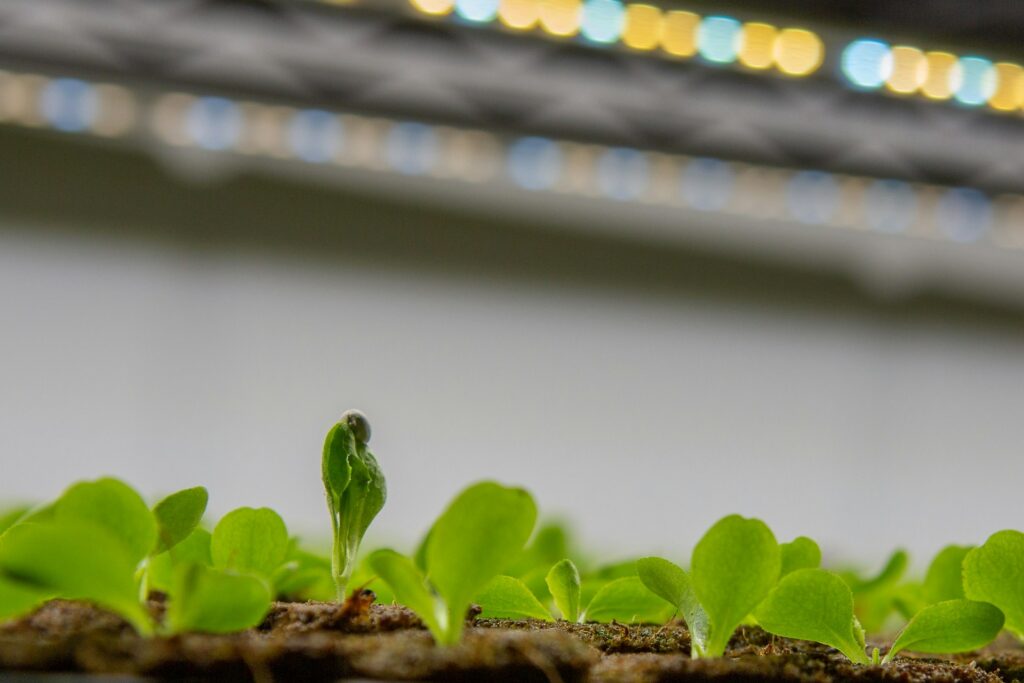
While vertical farming technology often focuses on mechanical innovations for indoor growing, the approach must also extend to the plant. Gene editing and accelerated breeding are quickly becoming cornerstones of thriving vertical agriculture, enabling scientists to develop specialized plant varieties suited to indoor cultivation.
The latest cultivars have traits ideal for vertical stacking, including compact architecture and shorter stems — this allows them to reach harvest faster. They are also capable of flourishing under LED spectrums, boosting their photosynthetic efficiency and outputs.
The genetic diversity of these crops has evolved over thousands of years to adapt to different environments and stressors. As such, they possess traits unlike those of modern-day crops.
There are over 2,000 vertical farms in the U.S., with Walmart and Albertson’s selling vertically grown products from their San Francisco-based warehouse. Other vertical agriculture initiatives operate from major cities like Atlanta, Orlando, Houston and Seattle.
These facilities are helping build a more resilient and secure food supply chain amid the increasing impacts of climate change. For one thing, localized agriculture reduces food miles, lowering transportation costs, potential long-haul disruptions and emissions. The localization significantly reduces the need for cold chain logistics and spoilage risks, which are primary drivers of food loss and waste during long-distance transport. It also boosts the freshness and nutritional value of produce for consumers.
Vertical farms further combat the unpredictability of climate change. For example, research suggests a 120-calorie deficit per person as global temperatures rise by 1° Celsius. By growing food in a controlled environment, the food industry can ensure consistent, year-round yields regardless of season or extreme weather.
Additionally, the advanced agricultural system decreases the need for pesticides, resulting in safer produce. The farms are especially well-suited to a fully traceable supply chain enabled by Industry 4.0 technologies. According to a recent study, IoT sensors can monitor all aspects of crop growth. At the same time, blockchain creates an immutable and transparent record of the product journey, enhancing accountability and confidence in food safety.
Vertical farming technology opens the door to endless possibilities for food security. However, numerous economic challenges remain. For example, equipment and construction have high initial costs, while ongoing energy expenses and climate control add additional barriers to its widespread adoption.
The industrial sector must think outside the box with new innovative solutions. More energy-efficient lighting, HVAC systems and modular manufacturing processes for farm systems could be key to unlocking its full potential.
Naturally, the overarching goal of vertical agriculture is to grow food anywhere. Considering there’s no greater challenge than growing food in space, the U.S. Department of Agriculture and the National Aeronautics and Space Administration collaborated in 2023 to cultivate produce on long-term missions to the Moon and Mars.
The endeavor pushes the boundaries of resource efficiency, while research on maximizing crop growth in closed-loop systems with minimal energy or water provides insights to make Earth-based vertical farming more productive.
Emerging vertical farming technology is having a tremendous impact on global food supplies and supply chain resilience. It is where agriculture meets industrial innovation and a place where engineering, manufacturing and logistics can converge in creating an agricultural revolution.
Revolutionized is reader-supported. When you buy through links on our site, we may earn an affiliate commision. Learn more here.

This site uses Akismet to reduce spam. Learn how your comment data is processed.