




 By Lou Farrell

Revolutionized is reader-supported. When you buy through links on our site, we may earn an affiliate commision. Learn more here.
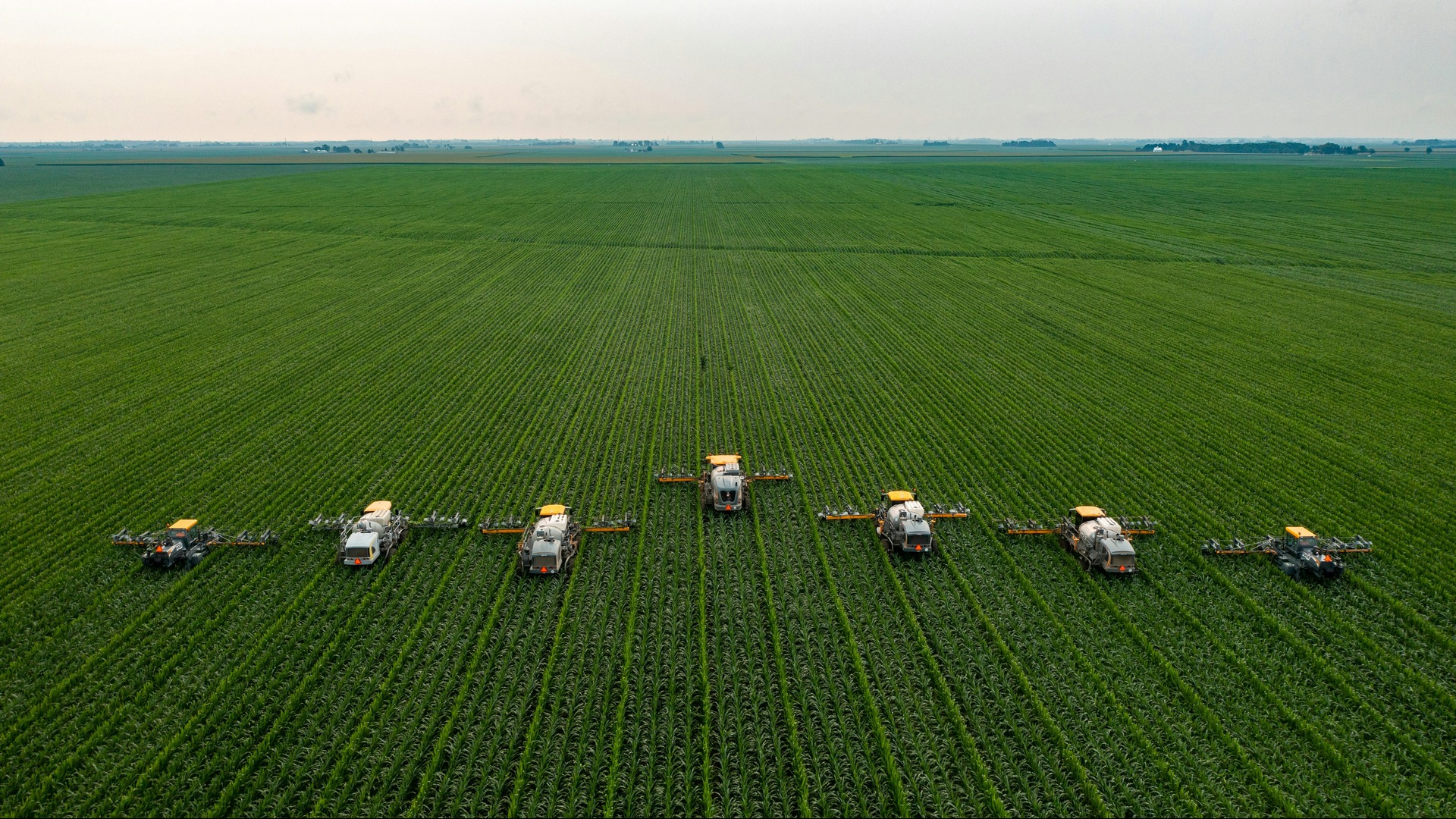
The agricultural sector stands at a technological turning point. AI in agriculture has transitioned from experimental concept to operational reality, with farmers deploying intelligent systems that predict pest outbreaks, diagnose crop diseases and automate labor-intensive tasks. These technologies improve yield, resource efficiency and profitability across operations of all sizes.
The use of AI in agriculture has accelerated beyond simple data collection into systems that execute predictive analysis and autonomous decision-making. These platforms process sensor and satellite imagery data to generate recommendations that influence planting schedules and irrigation timing.
The economic implications are substantial. Digital agriculture enhanced by artificial intelligence has the potential to boost agricultural GDP in low- and middle-income countries by more than $450 billion per year, representing a 28% increase for those regions. That scale of growth reflects AI’s capacity to optimize resource allocation, reduce input waste and identify productivity gains that traditional methods often miss.
Texas A&M AgriLife researchers developed an artificial intelligence model that predicts the movement and proliferation of destructive crop pests across entire states. The system generates weekly forecasts that allow farm managers to deploy targeted treatments before infestations establish themselves and shift pest management from reactive damage control to proactive prevention.
Traditional approaches to pest monitoring rely on trapping methods that capture data from specific points but struggle to project broader regional patterns. The AI-powered forecasts integrate multiple data streams, including temperature fluctuations, precipitation patterns and historical infestation records, to model pest behavior at scale. This statewide perspective gives agricultural operations advance notice of threats approaching from neighboring areas and enables coordinated response strategies that individual monitoring networks cannot achieve.
These systems shift from isolated detection to predictive intelligence and reduce pesticide application costs while minimizing crop loss. During early-season growth periods, that prevention proves especially valuable because plant damage at this stage has the greatest yield impact.
Researchers at UC Davis created an AI tool that delivers immediate field measurements of crop water status and nitrogen levels without laboratory analysis. The system combines smartphone camera technology with a handheld leaf spectrometer. Agronomists use this to assess plant health conditions during field walks and adjust irrigation or fertilization plans the same day.
Unlike conventional testing protocols that require days between sample collection and results, the real-time measurements from this system eliminate diagnostic delays. When water stress or nutrient deficiency occurs, producers can respond within hours rather than wait for laboratory confirmation. That speed prevents stress conditions from compounding into yield-limiting damage.
Broader applications of this diagnostic capability include remote sensing for irrigation and resource management. Satellite and drone systems collect real-time data on soil moisture and crop irrigation requirements. AI also improves weather forecasting accuracy and helps producers anticipate rainfall patterns and adjust water management accordingly.
The AgriPass robotics project addresses one of agriculture’s most persistent challenges — controlling weeds without excessive herbicide use or prohibitive labor costs. Its autonomous systems replicate the human weeding process at commercial scale and use computer vision to distinguish crops from unwanted vegetation and mechanical tools to remove weeds with minimal soil disruption.
Manual weeding becomes impractical for large operations facing labor shortages, while broadcast herbicide application raises environmental concerns and increasingly faces regulatory restrictions. The robotic approach targets individual plants, reduces chemical inputs and operates continuously during optimal conditions without fatigue limitations that constrain human crews.
Commercial viability depends on cost structure. AgriPass designed its systems for affordability at production volume and recognized that adoption requires equipment expenses that compete favorably with conventional weed management costs over multi-season deployment. Early implementations focus on high-value crops where precision weeding delivers the strongest return on investment.
Harvesting fragile crops like tomatoes demands gentle handling that robots historically struggled to execute. Advances in 3D-sensing technology and machine learning algorithms have produced robotic harvesting systems capable of identifying ripe produce, determining optimal grasp points and executing delicate picking motions without damaging the fruit.
Variable field conditions create the primary challenge for visual recognition. Natural lighting changes throughout the day, foliage obscures fruit and ripeness indicators vary between varieties. The machine learning algorithms train on thousands of images showing fruits at different maturity stages and viewing angles and teach the system to locate the peduncle attachment point and assess whether individual tomatoes meet harvest criteria.
Labor dependency for time-sensitive operations decreases with successful automated harvesting, particularly when delayed picking results in overripe product or field losses. The technology extends harvest windows by operating during early morning and evening hours when heat stress may compromise human productivity.
Deep learning models analyze crop images to identify crop diseases with accuracy levels that rival those of experienced agronomists. These AI in agriculture applications process leaf photos captured on smartphones or drones and detect subtle color variations and pattern changes that indicate fungal infections, bacterial diseases or viral conditions.
When producers identify diseases early, they can apply targeted treatments to affected areas instead of treating entire fields prophylactically. That level of precision reduces fungicide costs and limits unnecessary chemical exposure to healthy plants. The systems can also track disease progression over time and help growers assess whether initial treatments achieved control or require follow-up applications.
Training on extensive image libraries showing various crops at different disease stages and environmental conditions allows these algorithms to achieve high classification accuracy across multiple pathogen types. Research demonstrates that properly trained systems provide reliable diagnostic capability for operations without access to specialized plant pathology expertise.
The integration of AI in agriculture transforms the skill sets producers need and the operational decisions they make daily. As these systems mature, the use of AI in agriculture will likely expand from specific task automation into comprehensive farm management platforms that coordinate multiple technologies simultaneously. The question facing the industry involves how quickly operations can adapt their workflows to leverage intelligent systems while maintaining the agronomic judgment that distinguishes successful farming from algorithmic execution.
Revolutionized is reader-supported. When you buy through links on our site, we may earn an affiliate commision. Learn more here.

This site uses Akismet to reduce spam. Learn how your comment data is processed.